
 By As Law Online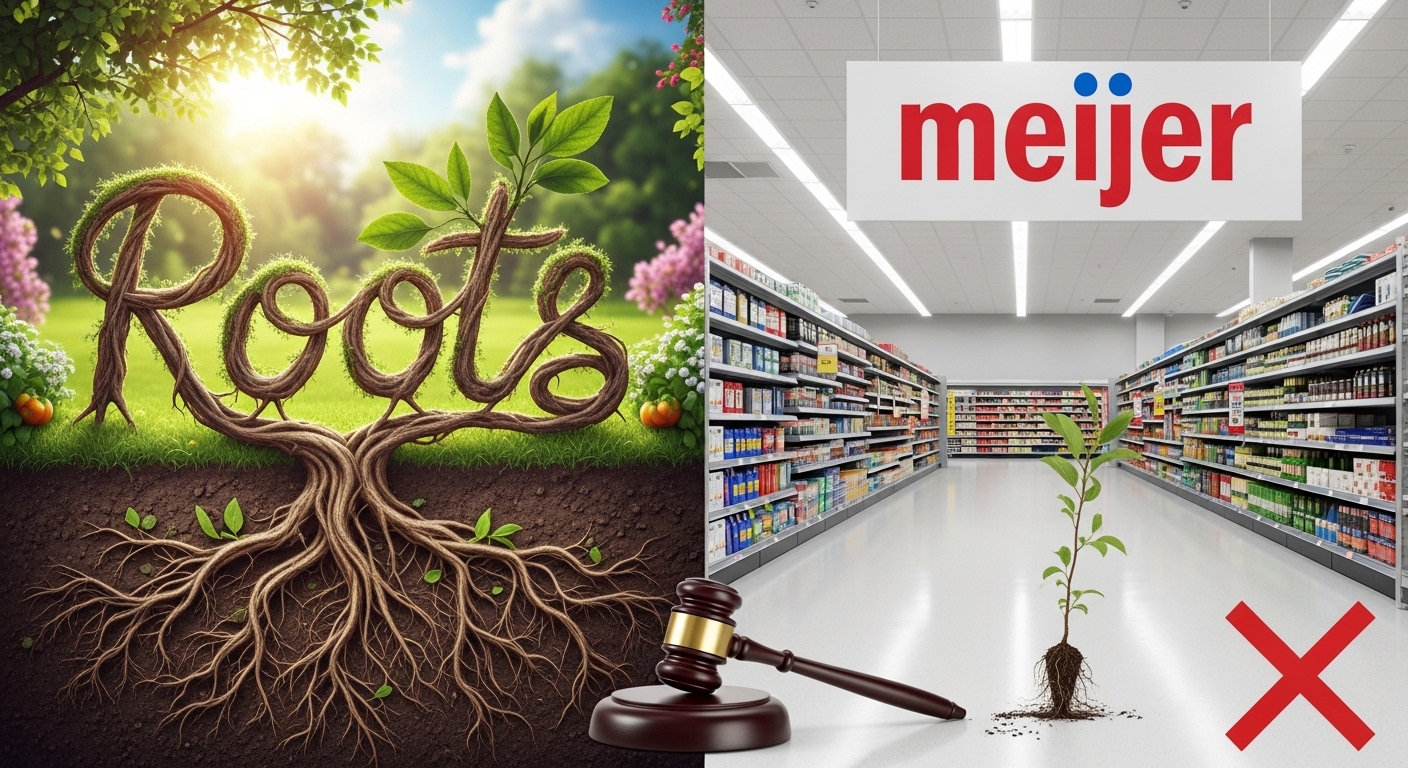
Canadian apparel company Roots Corporation filed a federal trademark infringement lawsuit against U.S. retailer Meijer, Inc. in August 2025, alleging that Meijer’s planned private-label children’s clothing line “ROOTS & THREADS” created a likelihood of consumer confusion with Roots’ long-established “ROOTS” trademarks. The case, filed in the U.S. District Court for the Western District of Michigan, highlighted core principles of federal trademark law under the Lanham Act. Although the parties resolved the matter through a voluntary dismissal with prejudice in December 2025, the roots meijer trademark dispute underscores ongoing challenges in brand protection, private-label product development, and the enforcement of established intellectual property rights in competitive retail markets.
The dispute arose as Meijer prepared to launch its back-to-school children’s apparel collection under the “ROOTS & THREADS” name. Roots, which has used its “ROOTS” mark continuously since 1973 for apparel, footwear, bags, leather goods, and related products, maintained that Meijer’s mark was confusingly similar and likely to mislead consumers into believing the products were affiliated with or sponsored by Roots. Meijer’s trademark application for “ROOTS & THREADS” had already drawn a non-final refusal from a U.S. Patent and Trademark Office examining attorney on grounds of likelihood of confusion. Despite cease-and-desist communications from Roots, the retailer proceeded with its plans, prompting the lawsuit. The filing sought injunctive relief, damages, destruction of infringing goods, and an order directing Meijer to abandon its trademark application.
This roots meijer trademark dispute illustrates how even well-intentioned private-label strategies can intersect with decades-old brand rights, affecting both businesses and consumers who rely on trademarks to signal product origin and quality.
Background & Legal Context
Roots Corporation, founded in Toronto in 1973, built its reputation on casual apparel and lifestyle products featuring a distinctive beaver logo. The company holds numerous U.S. trademark registrations for “ROOTS” and related marks covering clothing and accessories, with continuous use in commerce for over five decades. Roots has expanded its physical and online presence in the United States, including retail locations in markets such as Michigan, where Meijer operates more than 500 supercenters across the Midwest.
Meijer, a family-owned regional retailer headquartered near Grand Rapids, Michigan, offers a broad range of groceries, general merchandise, and private-label goods. Like many large retailers, Meijer develops exclusive brands to provide value-priced alternatives to national labels. In 2024–2025, the company pursued registration of “ROOTS & THREADS” for children’s clothing through the U.S. Patent and Trademark Office. The USPTO’s Trademark Examining Attorney issued a non-final office action refusing registration, citing Roots’ prior “ROOTS” registrations and the similarity of the marks and goods.
Federal trademark law in the United States is governed primarily by the Lanham Act (15 U.S.C. §§ 1051 et seq.). Enacted in 1946 and amended over time, the statute protects registered and common-law trademarks against infringement and unfair competition. Key protections appear in Section 32 (15 U.S.C. § 1114) for infringement of registered marks and Section 43(a) (15 U.S.C. § 1125(a)) for false designation of origin and unfair competition. Courts evaluate infringement claims through the “likelihood of confusion” test, considering factors such as the similarity of the marks, the relatedness of the goods, the strength of the senior mark, evidence of actual confusion, marketing channels, and the defendant’s intent.
The roots meijer trademark dispute followed a familiar pattern seen in retail trademark cases: a senior mark holder with established goodwill confronts a junior user whose mark incorporates a dominant element of the senior mark on closely related goods.
Key Legal Issues Explained
At the heart of the roots meijer trademark dispute were two primary claims:
- Trademark Infringement (Lanham Act § 1114): Roots alleged that Meijer’s use of “ROOTS & THREADS” infringed its federally registered “ROOTS” marks. To prevail, a plaintiff must show (1) ownership of a valid, protectable mark and (2) that the defendant’s use of a similar mark is likely to cause confusion among consumers as to source, affiliation, or sponsorship. The marks shared the prominent term “ROOTS,” and both involved children’s and general apparel—goods that overlap in the minds of ordinary consumers.
- Unfair Competition and False Designation of Origin (Lanham Act § 1125(a)): Even without direct reliance on federal registration, Roots asserted common-law rights and claimed Meijer’s actions created a false impression of affiliation. This claim often serves as a broader safety net for brand owners.
Additional issues included potential dilution of the famous “ROOTS” mark (though not the primary theory advanced) and the practical enforcement of USPTO office actions. A non-final refusal does not bar use but signals registration obstacles; many companies proceed with use at their own risk while challenging or negotiating the refusal.
Courts routinely apply the multi-factor “likelihood of confusion” analysis derived from precedents such as Polaroid Corp. v. Polarad Electronics Corp. (2d Cir.) and its variations across circuits. In the Sixth Circuit (which includes Michigan), relevant factors include the strength of the senior mark, degree of similarity, similarity of goods, evidence of actual confusion, marketing channels, intent of the defendant, and likelihood of expansion. Roots’ long use, widespread recognition in apparel, and the USPTO’s own refusal strengthened its position on several factors.
The roots meijer trademark dispute also raised practical questions about trademark clearance searches. Retailers launching private labels are expected to conduct comprehensive searches and obtain legal opinions before adoption, particularly when marks incorporate common words that may overlap with existing brands.
Latest Developments or Case Status
Roots filed the complaint on August 8, 2025 (Case No. 1:25-cv-00912, U.S. District Court, Western District of Michigan, Judge Robert J. Jonker presiding). The docket reflects standard early proceedings: issuance of summons, waiver of service, and a stipulated extension for Meijer’s response. An order to show cause issued in November 2025 when no answer had been filed.
On December 8, 2025, Roots filed a Notice of Dismissal with Prejudice, which the court promptly granted the following day. The case was terminated on December 9, 2025. A separate report was sent to the USPTO Director reflecting the court’s determination in the trademark action.
Voluntary dismissal with prejudice is a final resolution that bars Roots from refiling the same claims. While public records contain no disclosed settlement agreement or monetary terms—common in such matters—the outcome suggests the parties reached an amicable resolution, likely involving Meijer discontinuing or rebranding the “ROOTS & THREADS” line. Meijer’s trademark application was also noted as abandoned shortly after the USPTO refusal.
No further filings or appeals have appeared as of March 2026, confirming the dispute has concluded without a published judicial opinion on the merits.
Who Is Affected & Potential Impact
The roots meijer trademark dispute directly impacted:
- Consumers: Shoppers encountering “ROOTS & THREADS” products might have assumed an affiliation with the established Roots brand, potentially affecting purchasing decisions based on perceived quality, heritage, or origin. Trademark law exists in part to prevent such confusion and protect the public’s ability to rely on marks as source identifiers.
- Roots Corporation: As a brand with significant goodwill and U.S. market expansion, the company faced potential dilution of its distinctive mark and diversion of sales or brand recognition. Successful enforcement preserves the value of its intellectual property portfolio.
- Meijer and Similar Retailers: Private-label programs are vital for competitive pricing and customer loyalty. The case serves as a reminder that even internal brands must clear trademark hurdles. Retailers across the industry may now apply more rigorous clearance protocols for new lines.
- Broader Business Community: The dispute reinforces the importance of intellectual property due diligence for any company introducing new marks, especially in apparel and consumer goods where brand overlap is common.
Potential outcomes in similar unresolved cases could include permanent injunctions, product recalls, monetary damages (including profits or statutory damages in counterfeiting scenarios), and attorney fees for willful infringement. Here, the swift dismissal avoided prolonged litigation and associated costs.
What This Means Going Forward
The roots meijer trademark dispute, though resolved without a trial, illustrates several enduring legal realities. First, trademark rights arise from use in commerce, not merely registration; however, federal registration provides nationwide constructive notice and procedural advantages. Second, the USPTO’s examination process acts as an early warning system but does not eliminate the need for private enforcement through cease-and-desist letters and litigation when necessary. Third, voluntary settlements remain the norm in trademark cases—over 90% of federal IP disputes resolve before trial—allowing parties to control outcomes while avoiding unpredictable judicial rulings.
For businesses, the case emphasizes proactive trademark strategies: comprehensive clearance searches, monitoring of USPTO filings, and prompt response to office actions or third-party challenges. Consumers benefit indirectly as stronger enforcement maintains clear marketplace signals.
Industry observers and legal practitioners monitoring intellectual property developments should track similar private-label disputes. With e-commerce growth and expanding retail footprints, cross-border brand conflicts like this one are likely to increase.
Readers with questions about their own trademarks or potential infringement should consult qualified intellectual property counsel for advice tailored to their circumstances.
Conclusion
The roots meijer trademark dispute, though brief in duration, exemplifies the real-world operation of U.S. trademark law in protecting established brands while allowing retailers flexibility in product development. By reaching a resolution outside the courtroom, the parties avoided extended uncertainty for themselves and their customers. The outcome reinforces the value of early legal intervention and careful brand planning in today’s competitive marketplace.
Businesses and consumers alike benefit when trademarks function as reliable indicators of source and quality. As retail innovation continues, stakeholders should remain attentive to intellectual property developments that shape how brands coexist in the marketplace. For the latest updates on trademark law and related cases, consult official court dockets, USPTO records, or qualified legal professionals.
Frequently Asked Questions
What was the roots meijer trademark dispute about?
The dispute centered on whether Meijer’s “ROOTS & THREADS” children’s clothing line infringed Roots Corporation’s established “ROOTS” trademarks by creating a likelihood of consumer confusion under the Lanham Act.
Why did the USPTO refuse Meijer’s trademark application?
The examining attorney issued a non-final refusal citing the similarity between “ROOTS & THREADS” and Roots’ prior “ROOTS” registrations, combined with the relatedness of the goods (apparel).
Was the case decided by a judge on the merits?
No. The parties resolved the matter privately; Roots voluntarily dismissed the lawsuit with prejudice in December 2025, and the court entered an order terminating the case.
What does “dismissal with prejudice” mean?
It means the plaintiff (Roots) cannot refile the same claims against Meijer. The resolution is final as to those issues.
Does this case create new legal precedent?
No published opinion resulted, so it does not establish binding precedent. It serves as a practical example of how such disputes are typically handled through negotiation rather than full litigation.
How can businesses avoid similar trademark problems?
Conduct thorough trademark searches before adopting new marks, obtain legal clearance opinions, monitor USPTO filings, and respond promptly to any office actions or third-party objections.
You May Also Like: FirstEnergy Attorney-Client Privilege Ruling: Practical Advice for Counsel and Compliance Officers