
 By As Law Online
What the California Lemon Law Calculator Does and Who Qualifies
A lemon law calculator is a quick, consumer-friendly tool that estimates what a lemon law buyback or lemon law refund could look like under California’s Song-Beverly Consumer Warranty Act. By translating your vehicle’s core facts—purchase price, repair history, mileage, and fees—into a projected buyback amount, this buyback calculator helps you understand potential consumer compensation before you speak with a professional.
In California, the calculator is built around the state’s specific rules, including the usage fee (also called the mileage offset or mileage deduction) that reduces the refund based on miles driven before the first repair attempt for the defect. It is designed for vehicles purchased or leased in California during the warranty period, including certified pre-owned (CPO) vehicles covered by a manufacturer’s warranty. To qualify, the vehicle must be a defective vehicle with nonconformities that substantially impair use, value, or safety, and the manufacturer or its authorized repair facility must have had a reasonable number of repairs or the vehicle must have been out of service for an extended time.
Because lemon laws vary by state, the approach in Florida, Georgia, Texas, or New Jersey differs from California’s. A California-focused lemon law calculator should not be used to value claims in other states. It does not replace legal advice, but it can frame expectations for a manufacturer buyback, a replacement vehicle, or a negotiated settlement.
The Numbers You’ll Enter: Purchase Price, Mileage, Repair Attempts, Days Out of Service, and Fees
To generate a realistic estimate, a refund calculator asks for figures that mirror statutory remedies:
- Purchase price and total paid: The actual price paid or payable for the vehicle often anchors the buyback amount. Include the base purchase price, down payment, monthly payments made, and any lease payments if you leased the vehicle.
- Mileage details: Miles at the first repair attempt and current mileage. These numbers drive the usage fee, mileage offset, or mileage deduction, which is tied to California’s expected vehicle life of 120,000 miles for calculation purposes.
- Repair attempts and time out of service: Enter the number of repair attempts for the same defect and the total days your vehicle spent at a repair facility. These help evaluate whether you’ve met the reasonable number of repairs requirement or the 30+ days standard.
- Taxes and official fees: Sales tax, registration fees, DMV fees, and related official charges are typically refundable items in a lemon law refund.
- Finance-related data: Finance charges, outstanding loan balance, and the identity of any finance provider can affect how the calculator frames amounts payable to you and to the lender.
- Add-ons and collateral costs: Service contracts, alarm systems, and similar add-ons may be reimbursable or partially refundable. Enter incidental costs and collateral costs such as towing and rental costs connected to repairs.
- Vehicle status and coverage: Indicate whether the vehicle is certified pre-owned (CPO), whether the defect appeared and repairs occurred within the warranty period, and who the warranty provider is (usually the manufacturer).
Accurate inputs are crucial. Even small changes to the purchase price, miles at the first repair attempt, or the number of repair attempts can shift the projected buyback amount.
The Buyback Formula in California Explained: Usage Offset, Refundable Items, and Potential Civil Penalties
At its core, a California buyback calculator models statutory restitution under the Song-Beverly Consumer Warranty Act:
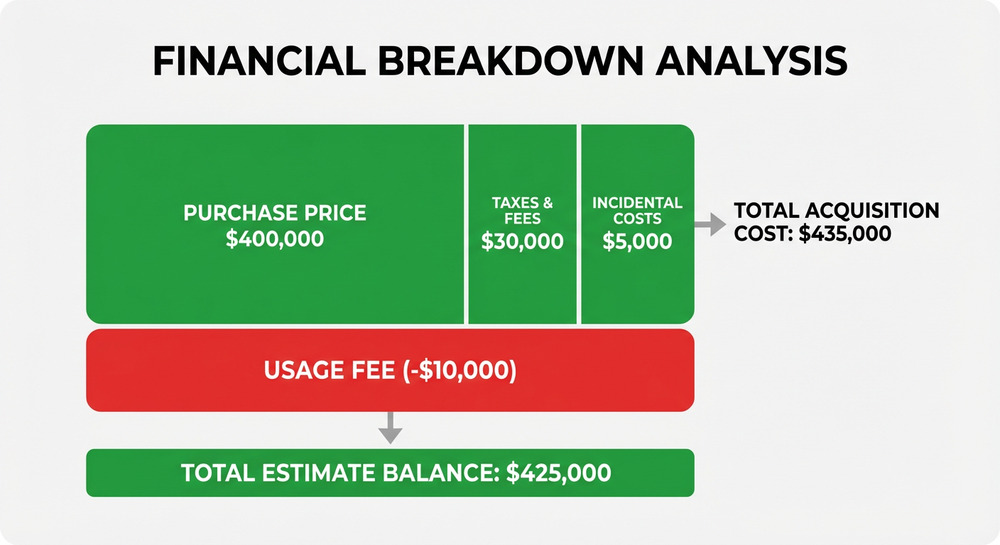
- Start with restitution: The lemon law refund generally includes the actual price paid or payable for the vehicle (the purchase price), plus sales tax, registration fees, and DMV fees, and can include finance charges you actually paid. The total paid may also reflect your down payment and monthly payments, as well as lease payments for lessees.
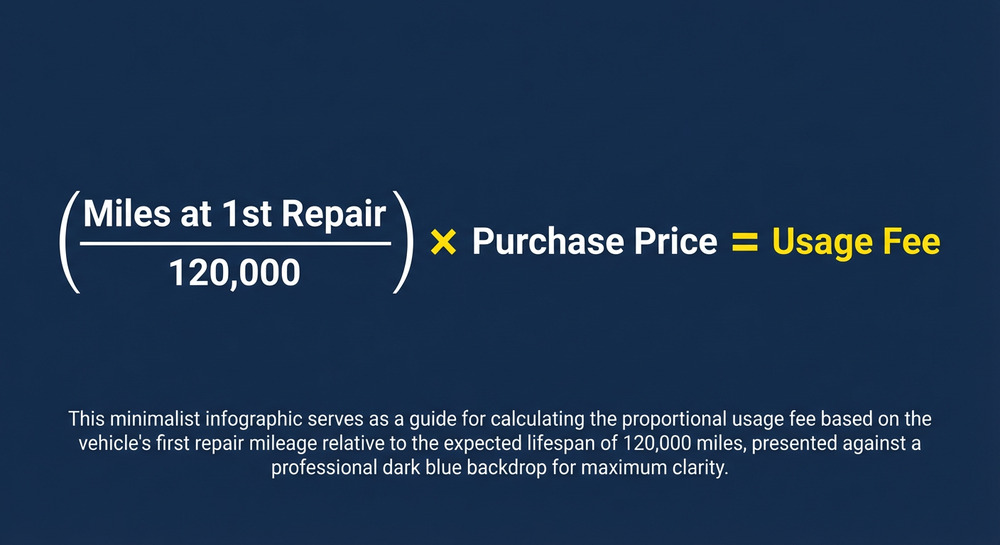
- Subtract the usage fee: California’s usage fee is a mileage-based deduction that accounts for your use of the vehicle prior to the defect’s first manifestation. The statutory mileage offset (mileage deduction) is commonly calculated as: usage fee = (miles at first repair attempt ÷ 120,000) × purchase price Because the expected vehicle life is taken as 120,000 miles, a higher odometer reading at the first repair attempt increases the deduction and reduces the buyback amount. This is why a precise mileage offset is central to any lemon law calculator or refund calculator.
- Add eligible extras: Incidental costs like towing and rental costs tied to the defective vehicle are often recoverable. Some add-ons—such as service contracts and alarm systems—may be refundable depending on the facts. The calculator may estimate these, but documentation will be needed for full reimbursement.
- Address loans and liens: If you have an outstanding loan balance, a portion of the lemon law buyback may be directed to your finance provider. The net to you will depend on the loan payoff and the final buyback amount.
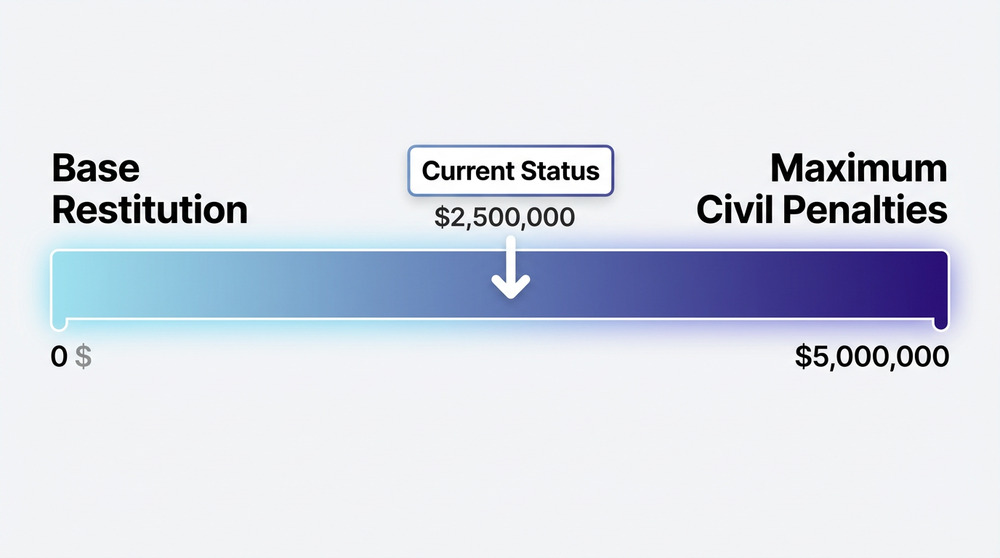
- Consider penalties: If the manufacturer willfully failed to comply, California courts can award a civil penalty up to two times actual damages. Calculators sometimes show a low-to-high range, with the higher end illustrating potential civil penalties in addition to the lemon law refund.
- Alternatives to buyback: In some cases, a replacement vehicle may be offered instead of a manufacturer buyback. The same usage deduction applies.
Not every case qualifies for penalties, and defect qualification, warranty coverage, and the reasonable number of repairs standard must be met. A Lemon Law attorney can help evaluate civil penalty exposure based on manufacturer conduct and documentation.
Step-by-Step: Using the Calculator and Interpreting Your Estimate Range
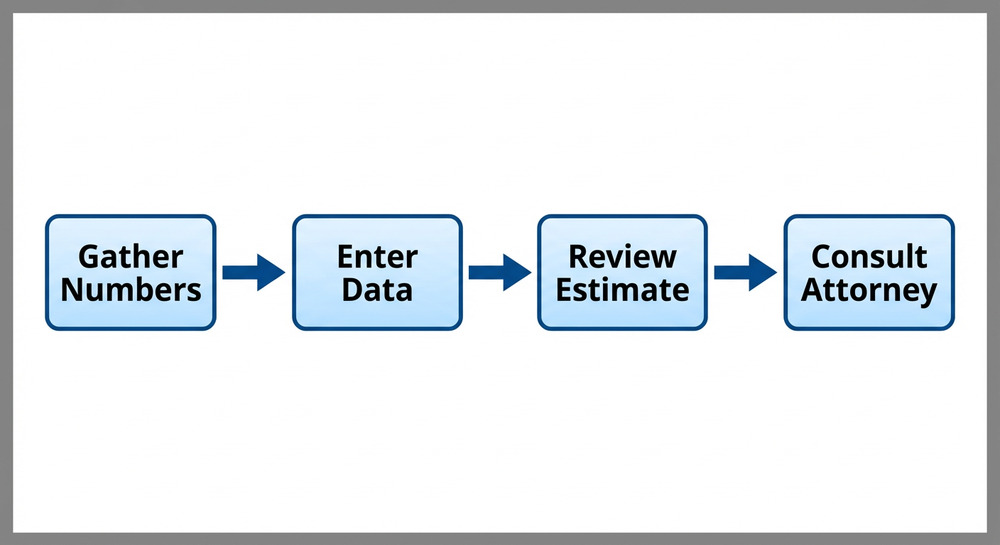
Follow this straightforward process to get a fast estimate:
- Gather core numbers
- Purchase price and total paid to date (down payment and monthly payments, or lease payments).
- Mileage at the first repair attempt and current mileage.
- Number of repair attempts for the same issue and total days out of service at an authorized repair facility.
- Sales tax, registration fees, DMV fees, finance charges, and any incidental costs like towing and rental costs.
- Information on service contracts or alarm systems and any outstanding loan balance.
- Open a trusted tool
- Use this California-specific option: this California lemon law calculator. It is tailored to California’s formula and accounts for the usage fee (mileage offset).
- Enter data carefully
- Input the purchase price exactly as shown on your contract. Enter accurate miles at the first repair attempt to ensure the mileage deduction is correct. Include the number of repair attempts and days out of service. Be sure to add sales tax, registration fees, DMV fees, and finance charges for a fuller lemon law refund snapshot.
- Review the results
- Most tools display a buyback amount range. The lower figure typically reflects base restitution after the usage fee. The upper figure may illustrate additional recoveries, such as incidental costs or possible civil penalties. Some buyback calculator tools identify the mileage offset line so you can see how much the usage fee lowered the result.
- Sense-check the estimate
- If the buyback amount looks off, check whether the purchase price, mileage at first repair attempt, or fees were entered correctly. Remember that a refund calculator cannot account for every nuance—such as disputed defect qualification, inconsistent repair records, or a manufacturer’s defenses.
- Consider next steps
- If the range suggests meaningful consumer compensation, consult a Lemon Law attorney to test the inputs against the statute and confirm eligibility.
Throughout this process, note how the usage fee drives the estimate. A small change in miles at the first repair attempt can significantly change the mileage deduction—and your projected lemon law buyback.
Accuracy, Limitations, and Next Steps: Documents to Gather, Timelines, and When to Consult a Lawyer
A lemon law calculator provides an informed starting point, not a final verdict. Accuracy depends on documentation and California-specific rules:
- What affects accuracy
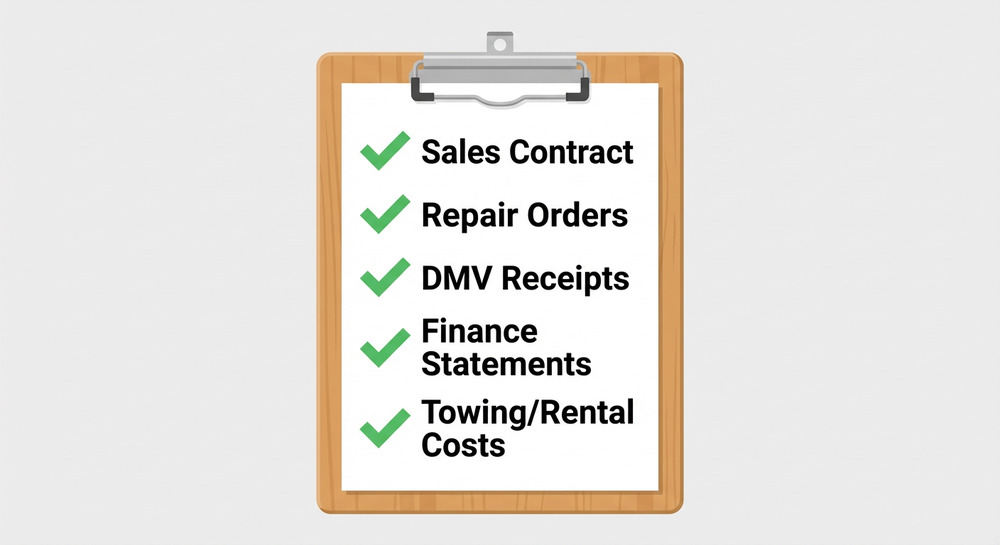
- Documentation: Purchase agreement showing the purchase price and sales tax; registration fees and DMV receipts; finance provider statements showing finance charges and outstanding loan balance; repair orders from an authorized repair facility; and proof of towing and rental costs.
- Timing: The warranty period and the timing of the first repair attempt are crucial. If the defect and repairs occurred outside the warranty period, a calculator could overstate recovery.
- Defect and use: The nature of the defective vehicle, the number of repair attempts, and days out of service determine whether you’ve met a reasonable number of repairs.
- Practical limitations
- Variability: Not all incidental or collateral costs are treated the same. Some add-ons, like service contracts or alarm systems, may be pro-rated or excluded depending on facts.
- Contested issues: Manufacturers may dispute defect qualification, usage fee calculations, or whether a problem substantially impairs use, value, or safety.
- Non-California claims: Rules differ in Florida, Georgia, Texas, New Jersey, and other states, so a California refund calculator should not be applied elsewhere.
- Documents to gather now
- Sales contract, title/registration, and DMV fee receipts.
- All repair orders and invoices, including dates and mileage at drop-off and pick-up.
- Proof of down payment, monthly payments or lease payments, and finance provider statements.
- Records of towing and rental costs and any case evaluation notes you have.
- Warranty booklet and any communications with the manufacturer or warranty provider.
- Timelines and process notes
- Once liability is established, manufacturers are expected to provide a prompt manufacturer buyback or replacement vehicle and reimbursement of allowable charges. Delays can increase legal exposure, including potential civil penalties.
- When to consult counsel
- Talk to a qualified Lemon Law attorney if your estimate suggests significant consumer compensation, if the manufacturer resists, or if your situation involves gray areas (CPO status, intermittent defects, mixed repair attempts).
- In California lemon cases, reasonable legal fees are typically paid by the manufacturer if you prevail, which means you can often obtain a case evaluation without upfront cost. For attorney support, you can review profiles like McMillan Law Group, which handles California lemon claims and can help refine the buyback amount beyond what any buyback calculator or refund calculator can predict.
Used properly, a California-focused lemon law calculator clarifies how the mileage offset and other inputs translate into a projected lemon law refund. With the right documents and legal guidance, you can move from an online estimate to a negotiated resolution that reflects the statute’s remedies.
You May Also Like: The Difference Between Settling and Going to Trial in a Personal Injury Case