
 By As Law Online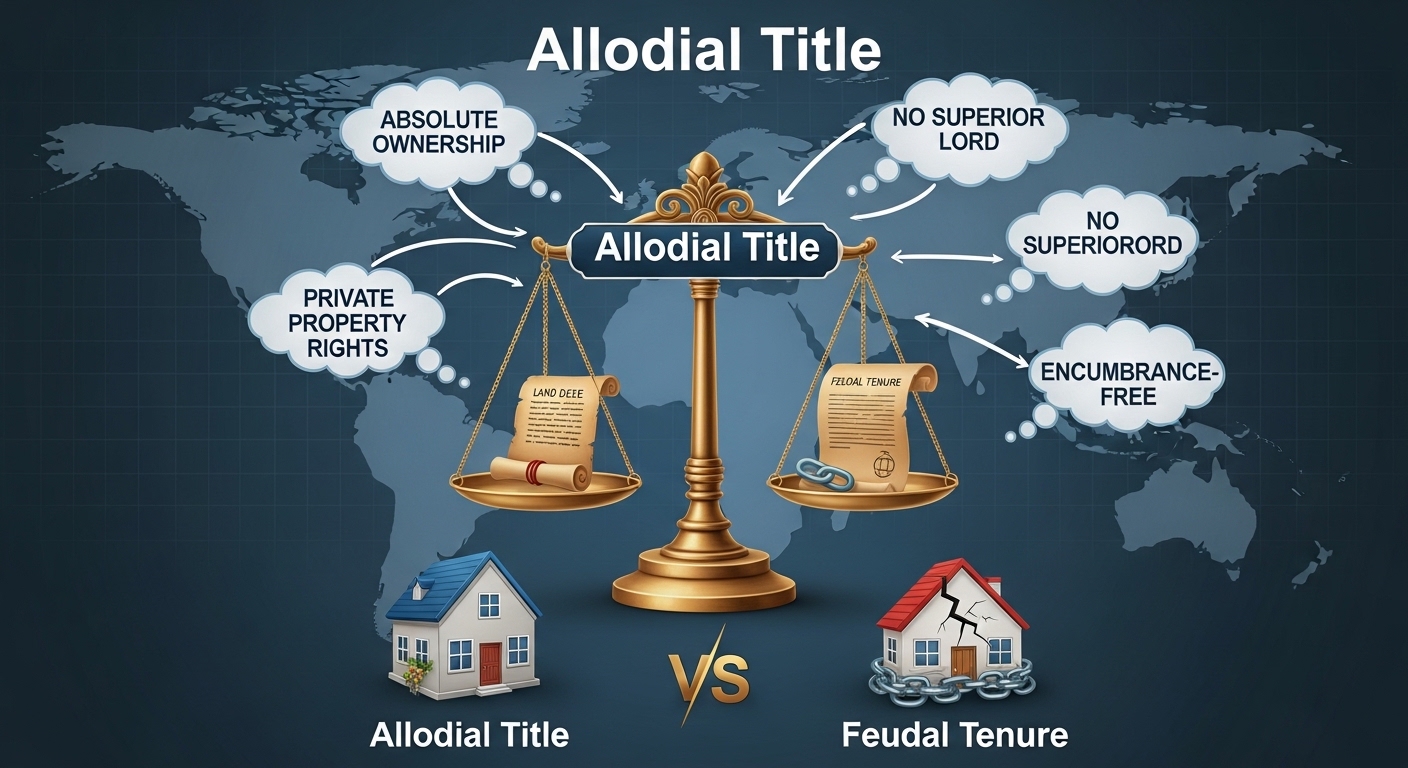
Allodial title represents a historical concept of absolute land ownership free from any superior authority or feudal obligations. In contemporary United States real estate law, however, the term often surfaces amid discussions of property rights, taxation, and government authority. Homeowners, real estate professionals, and legal practitioners encounter questions about whether true allodial title remains available and what it means for everyday property ownership.
This article explains the legal foundations of allodial title, its evolution in American law, and its limited role today. It addresses common misconceptions and clarifies how modern property ownership operates under established legal frameworks. The discussion matters because property taxes, eminent domain proceedings, and regulatory requirements affect millions of property owners annually. Understanding these distinctions helps individuals navigate real estate transactions, disputes, and compliance obligations more effectively.
Background and Legal Context
The concept of allodial title originated in medieval Europe as an alternative to feudal land tenure. Under feudal systems, landholders owed duties such as rent, military service, or fealty to a lord or sovereign. Allodial lands, by contrast, belonged outright to the owner without such encumbrances. English common law largely abandoned feudal tenures by the 17th century, transitioning toward forms of freehold ownership.
When the American colonies gained independence, many founders sought to reject European feudal remnants. Early state constitutions and land grant practices emphasized ownership free from hereditary lords. Several states explicitly declared their lands allodial to prohibit feudal tenures. For example, the Minnesota Constitution (Article I, Section 15), the Arkansas Constitution (Article 2, Section 28), and the Wisconsin Constitution (Article I, Section 14) contain provisions stating that all lands within the state are allodial and feudal tenures are prohibited. These clauses aimed to affirm private ownership rights distinct from colonial-era systems.
In practice, however, the United States adopted fee simple absolute as the predominant form of land ownership. Fee simple conveys the highest bundle of rights recognized under common law, including the ability to possess, use, sell, and bequeath property. Federal land patents issued by the United States government to private parties conveyed title that, once transferred, typically became subject to state real property laws. Courts have long recognized that these patents establish initial ownership but do not create perpetual exemptions from subsequent governmental powers.
Key Legal Issues Explained
Allodial title, in its purest historical sense, denotes ownership independent of any superior landlord. The owner holds the land free and clear of rent, service obligations, or superior claims. Modern legal definitions, such as those referenced in Black’s Law Dictionary, describe it as land owned without obligation of vassalage or fealty.
By comparison, fee simple ownership in the United States remains subject to four primary governmental powers: taxation, eminent domain, police power (zoning and regulation), and escheat (transfer to the state if the owner dies without heirs). These limitations mean that even the most complete form of private title does not equate to absolute immunity from public authority. Property owners pay real estate taxes to support local services, and governments may acquire land for public use through condemnation proceedings with just compensation, as required by the Fifth Amendment to the U.S. Constitution and parallel state provisions.
A limited statutory experiment occurred in Nevada. In 1997, the Nevada Legislature enacted provisions (Nevada Revised Statutes 361.900 through 361.920) creating an allodial title program for certain single-family residences. Qualifying homeowners could pay a lump sum or enter an installment agreement with the state treasurer. The state would then pay future property taxes from a dedicated trust account on behalf of the titleholder. Applications for new certificates closed in 2005, and existing titles require relinquishment upon sale or certain changes in occupancy. Even under this program, properties remained subject to eminent domain and other regulatory powers.
Claims of allodial title based solely on original federal land patents or self-prepared affidavits have appeared in various court filings. Federal and state courts consistently hold that such assertions do not override recorded deeds, mortgages, tax liens, or statutory obligations. For instance, attempts to assert superior allodial title in foreclosure or tax proceedings have been rejected as lacking legal foundation under current statutes and case law.
Latest Developments or Case Status
No sweeping legislative or judicial changes have altered the fundamental status of allodial title in recent years. The Nevada program remains closed to new applicants, with existing certificates governed by the original statutory framework and subsequent amendments. State legislatures and courts continue to address property tax collection, foreclosure procedures, and land-use regulations through standard channels.
Recent litigation involving allodial title claims typically arises in the context of tax disputes, mortgage foreclosures, or attempts to cloud title through recorded affidavits. Courts apply established precedents and dismiss unsupported theories without recognizing exemptions from taxation or other sovereign powers. No major federal court rulings or Supreme Court decisions have elevated allodial title beyond its historical and constitutional context.
Who Is Affected and Potential Impact
Homeowners represent the primary group impacted by discussions of allodial title. Individuals researching property rights may encounter online materials suggesting that filing certain documents can eliminate tax liability or mortgage obligations. In reality, such actions rarely succeed and may complicate title records or trigger legal challenges.
Real estate professionals, title companies, and lenders encounter these issues during due diligence. Clouded titles from improper filings can delay closings or require quiet-title actions in court. Local governments and tax assessors rely on clear fee simple ownership records to administer property taxes and public improvements.
Potential outcomes include continued enforcement of tax liens, mortgage foreclosures under state law, and regulatory compliance. In rare instances where allodial title certificates were issued under Nevada’s former program, owners enjoy prepaid tax status for the residence but must still comply with zoning, environmental, and eminent domain rules.
What This Means Going Forward
The persistence of allodial title as a legal concept underscores the balance American law strikes between private property rights and public interests. While fee simple provides robust protections, it operates within a framework that allows governments to address community needs through taxation and regulation. Property owners retain substantial rights to use, transfer, and enjoy their land, subject to lawful limitations.
Real estate markets, lending practices, and title insurance standards remain centered on fee simple ownership. Professionals and consumers should monitor state legislative proposals regarding property taxation, land-use reform, and title recording requirements. Staying informed through official government sources and qualified legal counsel ensures compliance and protects interests in an evolving regulatory environment.
Conclusion
Allodial title occupies an important place in the historical development of American property law as a rejection of feudal constraints. In modern real estate practice, however, fee simple ownership under state statutes and common law principles governs the vast majority of transactions. Clear understanding of these distinctions promotes informed decision-making and reduces the risk of costly legal disputes.
Frequently Asked Questions
What is allodial title?
Allodial title refers to absolute ownership of real property independent of any superior landlord or feudal obligations. In historical terms, it meant land held free from rent or service to another authority.
Does allodial title exist for private property in the United States today?
True allodial title, exempt from all governmental powers such as taxation and eminent domain, is not available for most private land. Fee simple absolute constitutes the standard form of ownership recognized under state laws.
What is the difference between allodial title and fee simple ownership?
Fee simple conveys the broadest rights available under modern law but remains subject to taxation, eminent domain, police power, and escheat. Allodial title historically implied no such superior claims, though modern equivalents are extremely limited.
Can homeowners obtain allodial title today?
No active statewide programs exist outside the discontinued Nevada initiative. Claims based on land patents or affidavits do not create enforceable exemptions from taxes or other obligations, according to consistent court rulings.
Are state constitutional provisions declaring lands allodial still in effect?
Yes, provisions in states such as Minnesota, Arkansas, and Wisconsin remain part of their constitutions. These clauses prohibit feudal tenures but do not eliminate modern governmental powers over property.
What should property owners do if they encounter allodial title claims in a transaction?
Consult a licensed attorney and obtain a professional title examination. Recorded documents asserting allodial title without statutory basis may require court action to clear.
You May Also Like: FAQ’S ON REGISTRATION OF DOCUMENTS RELATING TO IMMOVABLE PROPERTY IN TAMILNADU