
 By As Law Online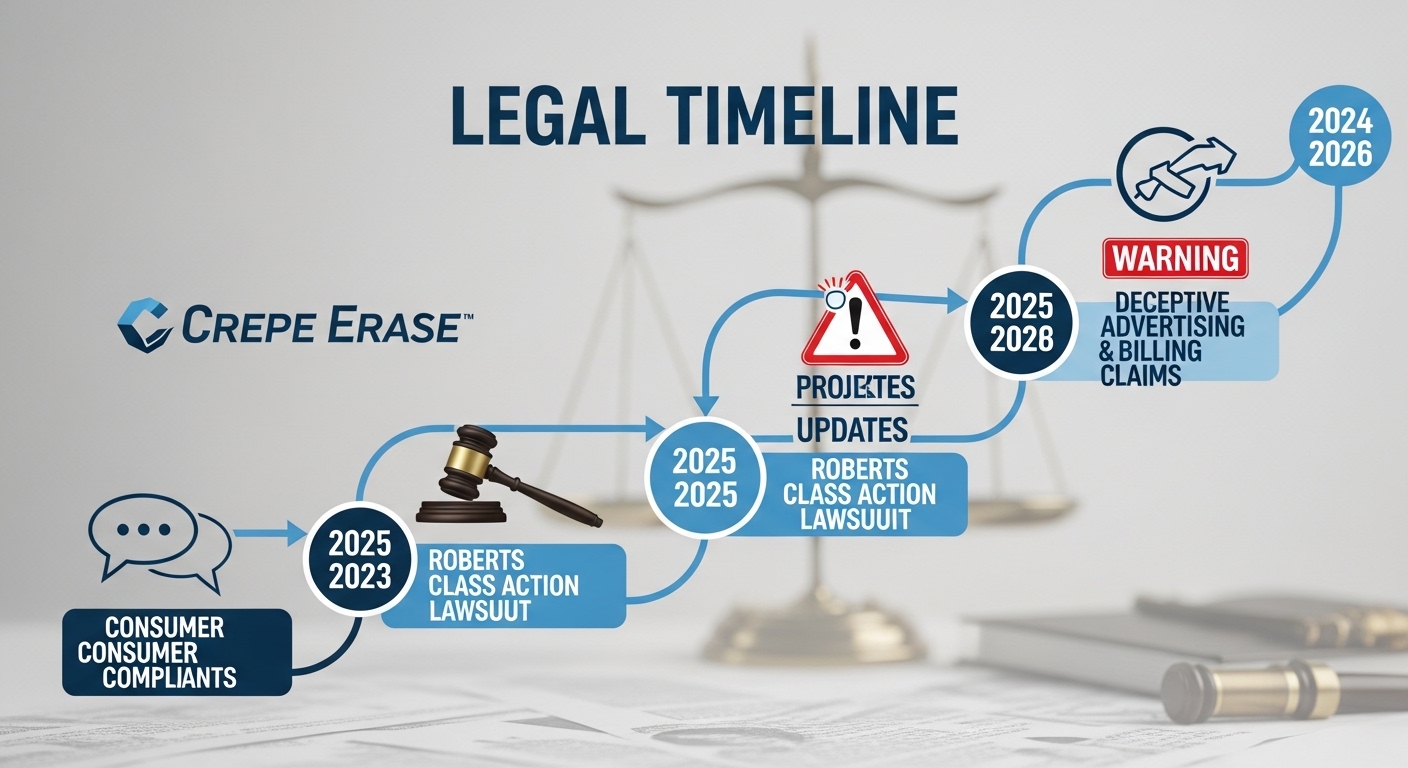
Crepe Erase is a skincare product line marketed primarily for improving the appearance of crepey skin, a common concern involving thin, wrinkled, or sagging skin often appearing on the arms, neck, chest, and legs. Sold through direct-response channels such as infomercials and online platforms by The Body Firm, LLC (affiliated with Guthy-Renker), the products have generated both consumer interest and significant complaints. Discussions of the crepe erase lawsuit have intensified in recent years, centering on allegations of misleading advertising and billing practices. As of April 2026, this article examines the known facts, legal context, and developments based on public records from consumer protection agencies, court filings, and regulatory bodies.
This overview draws from verifiable sources including Better Business Bureau (BBB) complaint data, Federal Trade Commission (FTC) guidelines, National Advertising Division (NAD) decisions, and recent court records. It aims to provide clarity for consumers seeking information on their rights under established consumer protection laws.
Background on Crepe Erase and Its Marketing
Crepe Erase products, including creams and treatment systems, are promoted as solutions to restore firmer, smoother skin through ingredients targeting dryness and loss of elasticity. Marketing materials often feature before-and-after imagery and claims of visible transformation, frequently endorsed in infomercial formats. The company operates from El Segundo, California, and distributes via its website and third-party channels.
The Body Firm, LLC, is not accredited by the BBB and has accumulated hundreds of consumer complaints in recent years. As of early 2026, the BBB reports over 300 complaints closed in the last three years, with a substantial portion filed in the preceding 12 months. Common themes in these complaints include dissatisfaction with product performance and unexpected recurring charges.
Core Allegations in the Crepe Erase Lawsuit Discussions
The phrase “crepe erase lawsuit” typically encompasses aggregated consumer complaints rather than a single, consolidated nationwide class action focused on product efficacy or subscriptions. Primary allegations include:
- Misleading Advertising Claims: Consumers assert that promotional materials overstate the products’ ability to significantly reduce or eliminate crepey skin. Critics argue that results fall short of implied expectations, potentially violating requirements for claim substantiation.
- Deceptive Billing and Subscription Practices: Many reports describe introductory offers or trial kits that allegedly transition into automatic recurring shipments at full price. Consumers claim disclosures about the subscription model were unclear or difficult to locate, leading to unauthorized charges. Cancellation processes are frequently described as cumbersome, requiring multiple contacts via chat or phone.
These issues align with broader concerns in the direct-to-consumer skincare industry regarding “negative option” marketing, where silence after an initial purchase is treated as consent for ongoing deliveries.
A separate but related development occurred in November 2025 with the filing of Roberts v. The Body Firm, LLC (Case No. 2:25-cv-11126, U.S. District Court for the Central District of California). This proposed class action alleges deceptive pricing practices, including the use of strike-through “original” prices to suggest discounts (such as 25 percent off) that were not truly limited-time offers. Plaintiffs claim countdown timers created false urgency. The lawsuit seeks to represent U.S. purchasers of The Body Firm’s cosmetic products during the relevant statute of limitations period. As of April 2026, the case remains in early stages, with no final approval or settlement reported.
No public federal or state court dockets indicate an active, certified nationwide class action specifically targeting Crepe Erase efficacy claims or subscription billing as of this writing. Past Guthy-Renker settlements involving other brands (such as a 2019 California resolution addressing auto-renewal transparency) have been referenced in discussions, but those did not directly resolve Crepe Erase-specific matters.
Legal Framework Governing These Claims
Consumer protection in this area rests on several established statutes and regulatory standards:
- Federal Trade Commission Act and ROSCA: The FTC enforces rules against deceptive advertising, requiring that claims be substantiated by competent and reliable scientific evidence. The Restore Online Shoppers’ Confidence Act (ROSCA) mandates clear disclosures for negative option plans, including the terms of recurring charges and an easy cancellation method. Violations can lead to enforcement actions, refunds, or injunctions.
- State Unfair and Deceptive Acts and Practices (UDAP) Laws: Most states, including California’s False Advertising Law and Consumer Legal Remedies Act, prohibit misleading representations in sales. These laws allow private actions and class proceedings when patterns of conduct affect multiple consumers.
- Self-Regulatory Review: In 2019, the National Advertising Division (NAD) of the Better Business Bureau’s National Programs reviewed certain Crepe Erase claims. Guthy-Renker appealed aspects to the National Advertising Review Board (NARB), which upheld some positions while recommending modifications for others. Such proceedings demonstrate industry accountability mechanisms outside formal litigation.
Court processes for these matters typically begin with individual complaints or proposed class filings. If certified as a class action under Federal Rule of Civil Procedure 23 (or state equivalents), affected consumers may receive notice and the opportunity to participate without filing separate suits. Settlements often include monetary relief, injunctive changes to business practices, and attorney fees, without any admission of wrongdoing by the defendant.
Latest Updates as of 2026
Consumer complaints continue to appear on platforms like the BBB and independent review sites into 2025 and early 2026. Many involve disputes over charges after attempted cancellations or perceived gaps in refund policies.
The Roberts case represents the most recent formal legal filing connected to The Body Firm’s marketing. It highlights ongoing scrutiny of pricing transparency in online retail. Regulatory interest in subscription practices remains high industry-wide, with the FTC emphasizing “junk fees” and easy cancellation in enforcement priorities.
No FTC lawsuit or major regulatory enforcement action specific to Crepe Erase has been publicly announced as of April 2026. However, the agency maintains active oversight of skincare marketing and negative option schemes, as evidenced by prior actions against similar marketers.
What Consumers Should Know and Practical Steps
Individuals who purchased Crepe Erase products and experienced issues may wish to:
- Review bank or credit card statements for any recurring charges.
- Document all communications with the company regarding orders or cancellations.
- Contact customer service through official channels and retain records.
- File complaints with the BBB, FTC (ftc.gov/complaint), or their state attorney general’s office to contribute to pattern recognition.
- Consult credit card issuers for potential chargebacks if charges appear unauthorized under cardholder agreements.
- Monitor class action settlement websites or court dockets for updates on cases like Roberts v. The Body Firm, LLC.
Participation in any certified class action is generally straightforward and does not require hiring personal counsel. Statutes of limitations vary by state and claim type, so timely action is advisable.
Why This Matters for Consumers and the Industry
Cases involving skincare products underscore the importance of realistic expectations and clear disclosures in advertising. Under U.S. law, companies must support performance claims with evidence, and subscription offers require upfront transparency to avoid deception. These principles protect both consumers from financial harm and legitimate businesses from unfair competition.
For affected individuals, the crepe erase lawsuit discussions highlight common pitfalls in online and infomercial purchases. They also illustrate how aggregated complaints can prompt regulatory review or private litigation, even absent a single landmark case.
Conclusion
As of 2026, the crepe erase lawsuit reflects persistent consumer concerns over advertising efficacy and billing transparency rather than a resolved or certified nationwide class proceeding on product performance. The recent pricing-related class action against The Body Firm, LLC, adds to the scrutiny of marketing practices. Consumers are encouraged to stay informed through official channels and exercise caution with subscription-based offers.
You May Also Like: OGX Lawsuit Updates: Claims, Allegations, and Consumer Rights