
 By As Law Online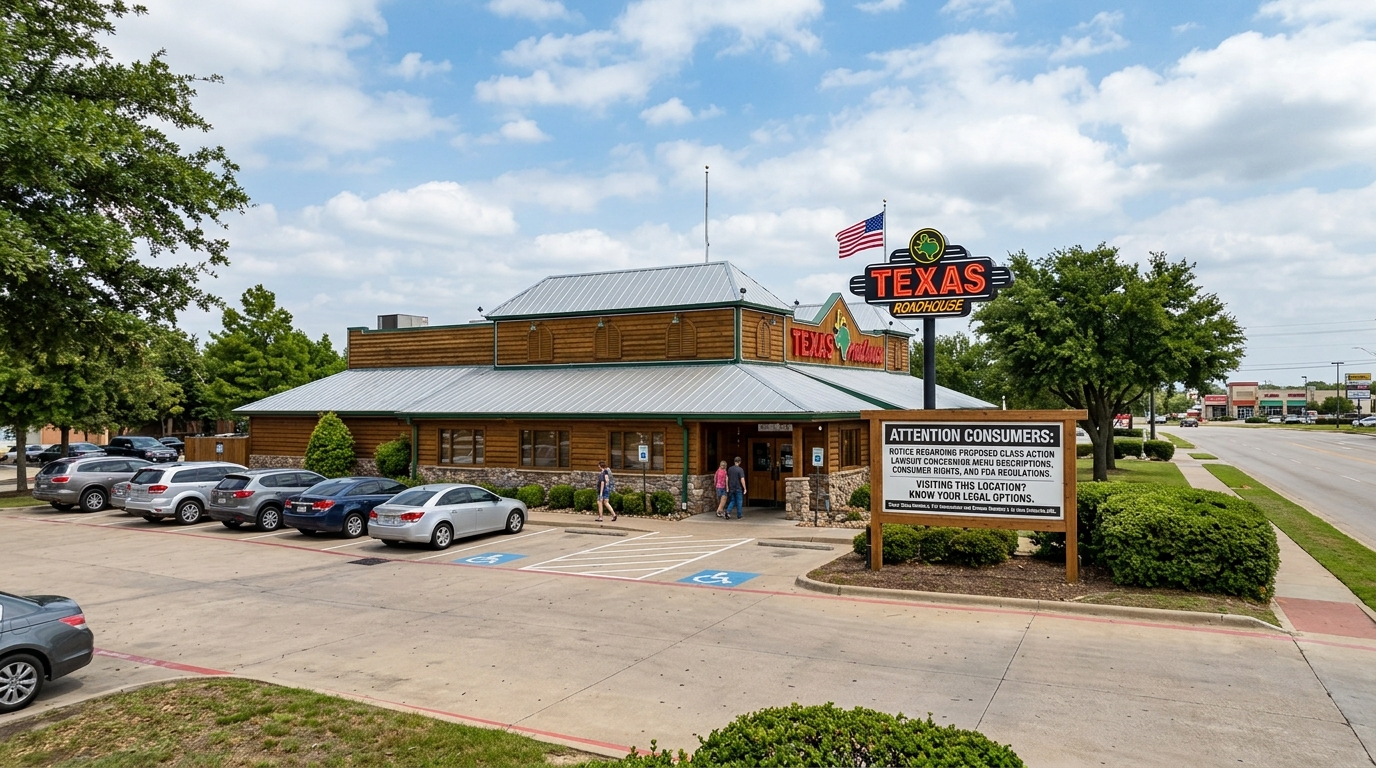
A proposed class action investigation announced in early 2025 has drawn attention to potential issues with menu descriptions at Texas Roadhouse restaurants. The law firm Trief & Olk, based in Hackensack, New Jersey, began seeking participants who dined at the chain and ordered specific items, alleging that certain menu listings contained deceptive or misleading information about ingredients, preparation methods, and sourcing.
This development raises broader questions about consumer rights when restaurants present menu items to the public. For diners nationwide, the case highlights how federal and state laws govern menu accuracy, what constitutes a misleading description, and the mechanisms available when customers believe they have been affected. While the investigation did not result in a certified class action according to subsequent reports, it underscores ongoing scrutiny of menu transparency in the restaurant industry.
This article explains the legal framework, the status of the claims, who may be impacted, and the practical implications for customers and businesses. The discussion is based on publicly available information and established legal principles. This article is for informational purposes only and does not constitute legal advice.
Background & Legal Context
Texas Roadhouse, Inc., a national casual-dining chain headquartered in Louisville, Kentucky, operates hundreds of locations across the United States. Like other large restaurant groups, it is subject to federal menu-labeling requirements established by the U.S. Food and Drug Administration (FDA) under the Nutrition Labeling and Education Act, as amended by the Affordable Care Act. Chains with 20 or more locations must disclose calorie counts for standard menu items and make additional nutrition information available upon request.
Beyond calories, menu descriptions must comply with general prohibitions against misleading claims. The Fair Packaging and Labeling Act (FPLA) and parallel state consumer-protection statutes, often called Unfair and Deceptive Acts and Practices (UDAP) laws, prohibit representations that could deceive a reasonable consumer about a product’s composition, quality, or characteristics. Courts evaluate such claims using an objective standard: whether the description would mislead an ordinary person acting reasonably under the circumstances.
Restaurant menus have long been a focal point for consumer litigation. Past cases involving national chains have addressed issues ranging from inaccurate calorie counts and “fresh” or “natural” claims to undisclosed sourcing or preparation methods. These lawsuits typically proceed as class actions when the alleged harm affects a large group of similarly situated customers who ordered the same items during a defined period.
Class actions in this context are governed primarily by Federal Rule of Civil Procedure 23 or analogous state rules. To proceed, plaintiffs must demonstrate numerosity (a large enough class), commonality of legal and factual questions, typicality of the named plaintiffs’ claims, and adequacy of representation. If certified, the case can resolve through settlement or trial, with notice provided to potential class members.
Key Legal Issues Explained
The core allegations in the proposed Texas Roadhouse menu class action centered on specific menu items, including grilled shrimp, grilled salmon, signature fresh baked bread, baked potato with toppings, sweet potato with toppings, and buttered corn. Plaintiffs contended that the descriptions failed to accurately reflect actual ingredients, preparation techniques, or sourcing, potentially leading reasonable consumers to expect something different from what was served.
Under FDA menu-labeling rules, covered establishments must ensure that menu information is truthful and not misleading. A description that implies a particular cooking method (such as “grilled”) or ingredient quality when the actual product differs could violate these standards. Similarly, state UDAP statutes, modeled after the Federal Trade Commission Act, allow consumers to seek damages, restitution, or injunctive relief for deceptive practices.
Customers who believe they received a product materially different from what the menu reasonably suggested may have claims for breach of express warranty, unjust enrichment, or violation of consumer-protection laws. Courts often require evidence that the misrepresentation was material (that is, it would have influenced a reasonable consumer’s decision to purchase) and that the consumer suffered an economic injury, such as paying for a premium item that did not meet the advertised standard.
Importantly, these laws do not require proof of intentional fraud in most jurisdictions. Negligence or even strict liability for misleading statements can suffice, depending on the statute. Defenses typically include arguments that the description was not misleading when viewed in context, that disclaimers on the menu or website cured any ambiguity, or that the plaintiff did not rely on the representation.
Latest Developments or Case Status
The investigation by Trief & Olk was publicly announced in late March or early April 2025. The firm invited affected diners to provide information about their purchases of the listed menu items. No federal or state court complaint appears to have been filed and certified as a class action based on available public records through 2026. Subsequent reporting indicates the investigation was closed without certification of a class.
Texas Roadhouse has not issued public statements confirming or denying the specific allegations in response to media inquiries at the time. The company, like most defendants in proposed consumer class actions, would be expected to contest the claims if formally filed, asserting that its menu descriptions comply with all applicable laws and that any variations are consistent with standard industry practices or disclosed terms.
No nationwide settlement or court ruling has been reported in connection with these particular menu-description claims. Separate consumer complaints about menu pricing transparency, such as alleged undisclosed service fees or discrepancies between advertised and charged prices, have surfaced in social media and promotional materials, but these appear to remain at the pre-litigation or early-investigation stage with no confirmed class certification as of May 2026.
Who Is Affected & Potential Impact
The proposed class would have included customers who purchased the identified menu items at Texas Roadhouse locations during the relevant statutory look-back period, typically three or four years depending on the state’s statute of limitations for consumer claims. Diners who relied on menu descriptions when deciding what to order, particularly those with dietary preferences or expectations about freshness, preparation, or quality, could have been impacted.
If a class action had proceeded and resulted in a settlement, affected customers might have received notice by mail, email, or publication and the opportunity to file a claim for a pro-rata share of any settlement fund. Common outcomes in similar restaurant menu cases include cash refunds, vouchers, or injunctive relief requiring revised menu language.
For the restaurant industry, such cases serve as reminders of the importance of precise menu language. Chains must balance creative marketing with regulatory compliance. Failure to do so can lead to defense costs, reputational harm, and operational changes, even if liability is not ultimately established.
What This Means Going Forward
The attention on Texas Roadhouse menu descriptions reflects a broader trend toward greater menu transparency. Consumers increasingly expect accurate information about ingredients, allergens, preparation methods, and nutritional content. Regulatory agencies and state attorneys general continue to monitor compliance with FDA rules and UDAP statutes.
Restaurants may respond by reviewing menu wording, adding more disclaimers, or enhancing online nutrition and ingredient disclosures. Customers, in turn, can protect themselves by asking servers for clarification when descriptions are unclear and retaining receipts or order confirmations.
Legal observers note that class actions in this area often prompt industry-wide improvements without requiring a final court judgment. Even when a proposed case does not advance to certification, the publicity can encourage voluntary changes and remind businesses of their obligations under consumer-protection laws.
Going forward, diners should monitor court dockets, state attorney general announcements, and reputable class-action databases for any formal filings or settlements related to restaurant menus. Those who believe they were affected by specific menu descriptions at any chain may consult a licensed attorney to evaluate their individual circumstances.
Conclusion
The proposed Texas Roadhouse menu class action, though not certified, illustrates important legal questions about the accuracy of restaurant menus and the rights of consumers who rely on them. By examining established regulatory frameworks and class-action procedures, diners and industry participants gain clarity on how these issues are addressed under U.S. law.
Staying informed about developments in consumer protection remains essential as menu transparency standards continue to evolve. Customers who encounter concerns with any restaurant’s menu descriptions are encouraged to review applicable laws in their state and, when appropriate, seek guidance from licensed legal professionals. Accurate information empowers better decisions and promotes accountability across the dining industry.
Frequently Asked Questions
What is the Texas Roadhouse menu class action about?
The proposed investigation focused on allegations that certain menu items at Texas Roadhouse were described in ways that could mislead consumers regarding ingredients, preparation, or sourcing. The claims were never certified as a class action.
Does the FDA regulate restaurant menus?
Yes. Chains with 20 or more locations must follow FDA menu-labeling regulations requiring calorie counts and truthful, non-misleading descriptions. Additional nutrition information must be available upon request.
Can I still join a class action against Texas Roadhouse for menu issues?
No active certified class action exists based on current public information. Individuals with specific concerns should consult a qualified attorney, as statutes of limitations may apply.
What laws protect customers from misleading restaurant menus?
Federal laws such as the FPLA and FDA regulations, plus state UDAP statutes, prohibit deceptive practices. Consumers may seek damages or other relief through individual or class claims.
What should I do if I think a menu description misled me?
Keep your receipt or order confirmation, note the specific description and what you received, and consider contacting the restaurant or consulting an attorney. Documenting the discrepancy promptly strengthens any potential claim.
Are menu prices and fees covered by consumer protection laws?
Yes. Many states require clear disclosure of all charges. Hidden fees or surcharges that are not reasonably apparent may violate UDAP statutes, though separate investigations into pricing transparency at Texas Roadhouse remain in early stages.
You May Also Like: Inside the OtterSec Lawsuit: Allegations, Evidence, and Legal Strategy