
 By As Law Online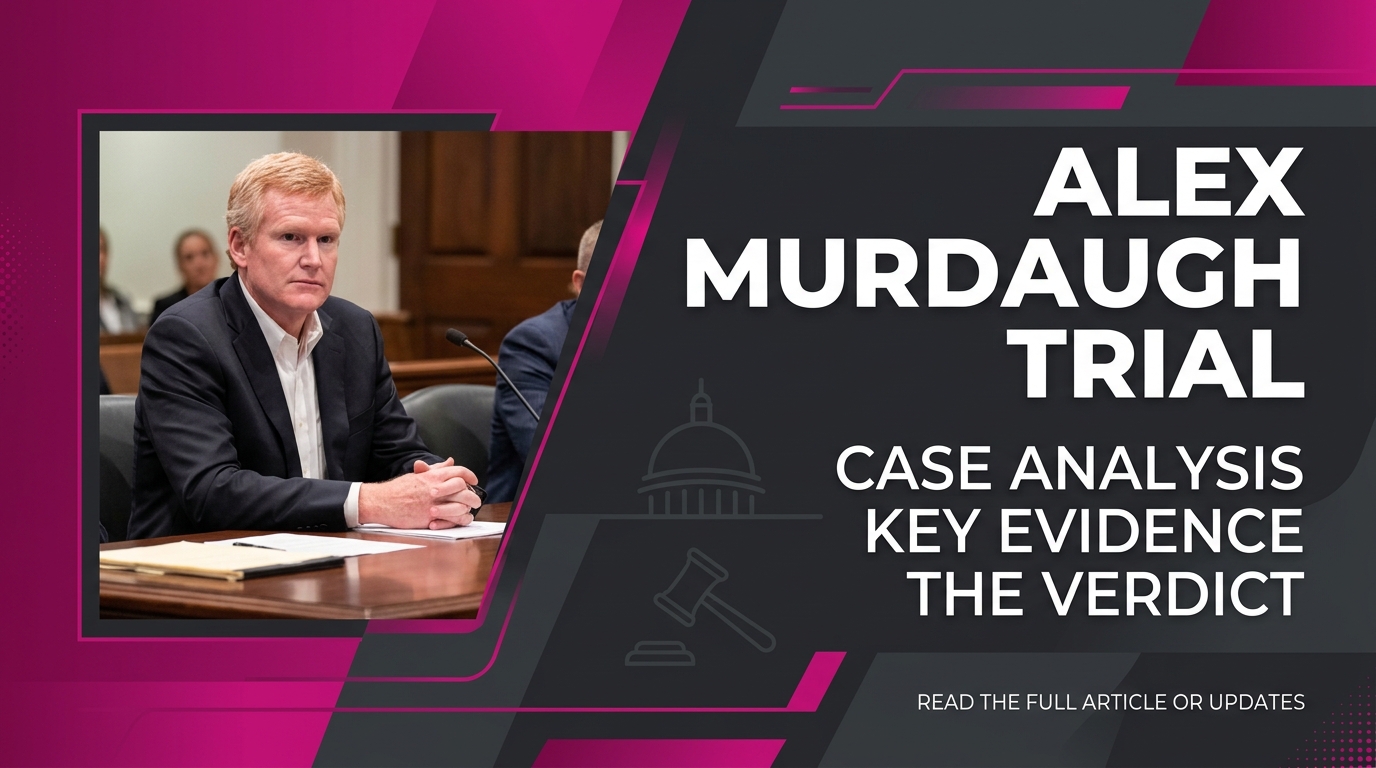
In a stunning development that has reignited national interest in one of the most closely watched criminal cases in recent American history, the alex murdaugh trial has entered a dramatic new phase. On May 13, 2026, the South Carolina Supreme Court unanimously overturned Alex Murdaugh’s 2023 double murder convictions in the deaths of his wife, Maggie Murdaugh, and son, Paul Murdaugh. The court cited egregious jury interference by former Colleton County Clerk of Court Becky Hill. Just weeks later, on June 8, 2026, Chief Justice John W. Kittredge assigned Circuit Judge Debra R. McCaslin exclusive jurisdiction over all future proceedings, including any retrial.
This article examines how the case reached this point, introduces the new judge who now holds authority over the matter, and analyzes what these changes mean for the upcoming proceedings. Readers following the alex murdaugh trial will find a clear timeline, legal context, and insights into the road ahead.
The Road to Retrial: A Timeline of the Alex Murdaugh Double Murder Case
Understanding the current moment requires stepping back through the key events that shaped this saga.
The story begins on June 7, 2021, when Maggie and Paul Murdaugh were shot and killed at the family’s Moselle property in rural Colleton County, South Carolina. Alex Murdaugh, a prominent personal injury attorney from a storied legal family in the Lowcountry, quickly became the focus of the investigation.
After a lengthy probe that also examined Murdaugh’s financial dealings, the case went to trial in January 2023 in Colleton County. Judge Clifton Newman presided. On March 2, 2023, the jury convicted Murdaugh on two counts of murder and two weapons charges. He received two consecutive life sentences without the possibility of parole.
Almost immediately after the verdict, questions emerged about the conduct of Colleton County Clerk of Court Becky Hill. Jurors later provided affidavits describing comments Hill made during the trial that appeared designed to steer them toward a guilty verdict. Murdaugh’s defense team filed a motion for a new trial on October 27, 2023.
A post-trial hearing took place in January 2024 before retired Chief Justice Jean Toal, who had been appointed to handle the matter. That court denied the request for a new trial. Murdaugh appealed. The South Carolina Supreme Court heard oral arguments on February 11, 2026, and issued its unanimous decision on May 13, 2026, reversing the denial and ordering a new trial.
The case was remanded to the circuit court. On June 8, 2026, the Supreme Court took the additional step of assigning a single judge, Judge Debra R. McCaslin, to oversee every aspect of the matter going forward.
Why Did Alex Murdaugh Get a New Trial? The Becky Hill Jury Tampering Allegations
The core reason for the reversal lies in jury tampering allegations against Becky Hill. The South Carolina Supreme Court found that Hill’s actions created a presumption of prejudice that the state could not overcome.
Jurors described several specific comments Hill made during the trial:
- She told jurors “not to be fooled” by evidence or arguments presented by Murdaugh’s attorneys.
- Before Murdaugh testified, she instructed them to “watch him closely,” “look at his actions,” and “look at his movements,” which some jurors understood as signals that he was guilty.
- She suggested that deliberations “shouldn’t take us long.”
Hill also interacted with at least one juror outside normal channels, offering assistance and speculating about the case. The court noted Hill’s apparent motivation: she was writing a book about the trial and believed a guilty verdict would increase sales and her public profile.
These actions went far beyond normal administrative contact between a clerk and jurors. Under longstanding legal precedent (the Remmer presumption), private communications with jurors about the case are considered presumptively prejudicial. The state bears a heavy burden to show the comments did not affect the verdict. In this instance, the South Carolina Supreme Court concluded the state failed to meet that burden.
Hill later faced separate criminal charges for other misconduct during the trial, including sharing sealed exhibits with the media and lying about it under oath. In December 2025 she pleaded guilty to obstruction of justice, perjury, and misconduct in office. She received probation and community service but was never charged with jury tampering itself. Murdaugh’s attorneys have since filed a civil lawsuit against her.
The Supreme Court’s May 2026 opinion described Hill’s conduct as “breathtaking and disgraceful” and “unprecedented in South Carolina.” The justices emphasized that even if the evidence against Murdaugh was strong, the integrity of the jury process could not be compromised in this way.
South Carolina Supreme Court Decision: Key Legal Takeaways
The May 13, 2026 ruling is significant for several reasons beyond this single case.
First, it reaffirms the fundamental constitutional right to a fair trial by an impartial jury. The court made clear that no one, including a longtime court official, can insert themselves into jury deliberations without consequences.
Second, the decision provides practical guidance for the retrial. The Supreme Court instructed the trial court to carefully limit evidence of Murdaugh’s financial crimes. While some financial evidence may remain relevant to motive, the court warned against allowing inflammatory details that could unfairly prejudice the jury under South Carolina Rules of Evidence 403 and 404(b).
Third, the ruling sends a strong message to the South Carolina judicial branch about the importance of protecting the jury process in high-profile cases. Court clerks, bailiffs, and other staff must understand the strict boundaries around their interactions with jurors.
The decision was unanimous, with Chief Justice Kittredge and Associate Justices Few, James, Hill, and Verdin all concurring. This unity underscores how seriously the court viewed the violation.
Who Is Judge Debra R. McCaslin? Background of the New Presiding Judge
On June 8, 2026, Chief Justice Kittredge signed an order vesting Judge Debra R. McCaslin with exclusive jurisdiction over all general sessions matters tied to the Murdaugh indictments. This includes any future retrial, pre-trial motions, civil forfeiture actions, and related proceedings.
Judge McCaslin brings a distinctive background to the role. A lifelong resident of Chapin, South Carolina (born in Tampa, Florida), she graduated from Chapin High School and earned a bachelor’s degree in political science from the College of Charleston in 1990. She worked for U.S. Senator Strom Thurmond early in her career before attending the University of South Carolina School of Law, where she earned her Juris Doctor in 1993.
After law school, she clerked for attorney J. Preston Strom Jr. and later worked as an associate at the Leventis Law Firm. In 1995 she opened her own practice, focusing on criminal defense and other matters. She remained in private practice until her election to the circuit court.
On February 5, 2020, the South Carolina General Assembly elected her to an at-large circuit court seat. As an at-large judge, she can preside in any circuit in the state, giving her flexibility to handle complex or high-profile matters wherever needed.
Her experience as a former criminal defense attorney is particularly relevant here. Judges with defense backgrounds often bring a heightened sensitivity to defendant rights and fair trial issues. In a case where the previous conviction was overturned precisely because of a fair trial violation, this perspective may prove valuable in managing pre-trial motions and ensuring the new proceedings meet constitutional standards.
What Judge McCaslin’s Appointment Means for the Alex Murdaugh Trial Proceedings
The assignment of Judge Debra R. McCaslin with exclusive jurisdiction represents a deliberate effort to centralize oversight and promote impartiality. By removing the case from its original Colleton County setting and the original trial judge, the Supreme Court has created space for a fresh start under a jurist with no prior involvement in the matter.
This structure offers several practical advantages:
- All motions will go before one judge who is fully immersed in the case history and the Supreme Court’s directives.
- Pre-trial rulings on evidence, especially the scope of financial crime evidence, will be consistent.
- Jury selection can be managed with an eye toward seating an impartial panel, potentially drawing from a broader geographic area if the judge orders a change of venue or venire.
- The retrial itself can proceed under clear ground rules established early by the assigned judge.
As of mid-June 2026, no retrial date has been set. Expect a period of vigorous pre-trial litigation. Defense attorneys Dick Harpootlian and Jim Griffin have already signaled they will aggressively litigate evidentiary issues and jury selection. The Attorney General’s office has confirmed its intent to retry the case and has ruled out any plea agreement.
The new judge will also need to address the intense media interest and security requirements that accompany any retrial in this matter. High-profile cases test the resources of the South Carolina judicial branch, and Judge McCaslin’s experience will be put to immediate use.
The exterior of the South Carolina Supreme Court building in Columbia, S.C. is shown Wednesday, Jan. 18, 2023. The South Carolina Supreme Court is set for an all-male bench for the first
The Legal Impact and What Comes Next
The overturning of the convictions and the appointment of a new judge do not mean Alex Murdaugh will walk free in the near term. He continues to serve a lengthy sentence on separate financial crime convictions stemming from his theft of millions from clients and others. Those convictions remain in place.
For true crime observers and legal professionals, this chapter of the alex murdaugh trial offers a master class in several areas: the power of post-trial investigation into jury conduct, the limits of harmless error analysis when fundamental rights are at stake, and the importance of institutional safeguards in sensational cases.
It also raises practical questions about how South Carolina courts will handle future high-profile matters. Will more cases be assigned to at-large judges from the outset? How will courts balance transparency with the need to protect jurors from outside influence?
The broader public can take some reassurance from the system’s self-correction. The South Carolina Supreme Court identified a serious problem, applied established legal standards, and took decisive action to protect the right to a fair trial. That process itself demonstrates institutional integrity.
Conclusion
The alex murdaugh trial has once again seized the spotlight, this time not because of new evidence about the murders themselves, but because of a fundamental breakdown in the process that led to the original convictions. With Judge Debra R. McCaslin now at the helm, the case moves forward under new leadership and with clear directives from the state’s highest court.
A retrial will not erase the tragedy of Maggie and Paul Murdaugh’s deaths, nor will it resolve every question surrounding the Murdaugh family saga. It will, however, provide a fresh opportunity for the justice system to demonstrate that every defendant, regardless of background or the weight of public opinion, is entitled to a fair trial before an impartial jury.
For those tracking this case, the coming months will bring new motions, new rulings, and eventually a new trial date. The story is far from over. Stay informed through official court records and reputable reporting as proceedings unfold under Judge McCaslin’s oversight.
You May Also Like: Amy Coney Barrett: Supreme Court Jurisprudence