
 By As Law Online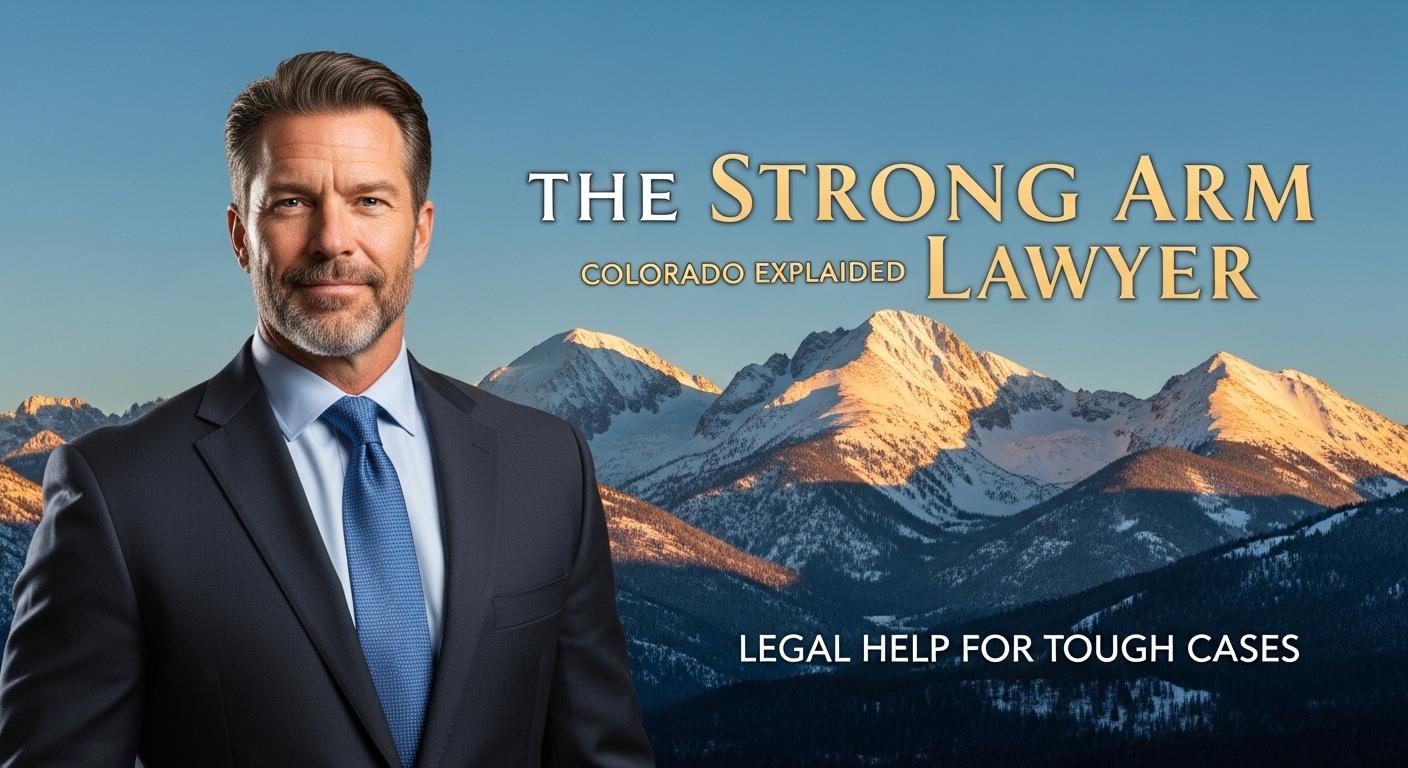
The Strong Arm Lawyer Colorado is a recognized brand associated with Franklin D. Azar and the law firm Franklin D. Azar & Associates, P.C. Established as one of the state’s largest plaintiff-focused personal injury practices, the firm has operated under the Strong Arm designation since its founding. This article explains the firm’s role in Colorado’s legal landscape, the types of cases it handles, and the broader framework of personal injury law that applies when individuals seek compensation after serious accidents or injuries. The discussion draws on established legal principles, court procedures, and regulatory standards to provide clarity for those navigating complex disputes.
Who Is the Strong Arm Lawyer Colorado?
Franklin D. Azar, commonly identified with the Strong Arm Lawyer Colorado moniker, founded Franklin D. Azar & Associates, P.C. in 1987. A Colorado native born in Pueblo and raised in Trinidad, Azar earned a bachelor’s degree cum laude from the University of Colorado Boulder in 1979 and a Juris Doctor from the University of Denver College of Law in 1982. He began his career as an assistant district attorney in Colorado’s Third Judicial District before transitioning to private practice.
The firm has grown into Colorado’s largest plaintiff-centered personal injury law firm, with offices located in Aurora, Boulder, Colorado Springs, Denver, Fort Collins, Glenwood Springs, Greeley, Grand Junction, Lakewood, Littleton, Longmont, Pueblo, and Thornton. Public records and firm statements indicate it has represented more than 50,000 clients and recovered over $2.3 billion in compensation across various claims. The Strong Arm branding emphasizes aggressive advocacy on behalf of injured individuals against insurance companies and other at-fault parties.
Azar and the firm have participated in high-profile matters, including class actions against major retailers for wage and hour violations, product liability suits involving defective equipment, and multi-district litigation in federal courts. For instance, Azar served on the Plaintiffs’ Steering Committee for federal multi-district litigation concerning certain hip implant devices. These engagements illustrate the firm’s involvement in both state-level personal injury matters and complex national cases.
Types of Cases Handled by the Strong Arm Lawyer Colorado
The firm concentrates on personal injury claims that often present significant challenges, such as disputes over liability, substantial medical expenses, or resistance from insurers. Common case categories include:
- Motor vehicle accidents involving cars, trucks, motorcycles, rideshare vehicles, or pedestrians.
- Workplace injuries, including construction accidents and workers’ compensation claims.
- Product liability cases involving defective consumer goods or medical devices.
- Insurance bad faith claims, where coverage is denied or undervalued.
- Mass torts and class actions arising from widespread harm.
Tough cases frequently arise when injuries are catastrophic (such as traumatic brain injuries or permanent disabilities), when multiple parties share potential fault, or when defendants include large corporations with extensive legal resources. In these situations, experienced representation can address evidentiary hurdles, expert witness requirements, and prolonged negotiations.
Key Principles of Personal Injury Law in Colorado
Colorado law governs these claims through statutes and common-law precedents administered by state district courts and, in appropriate cases, federal courts. Central concepts include negligence, causation, and damages.
Under Colorado law, a plaintiff must generally prove four elements: duty of care owed by the defendant, breach of that duty, causation linking the breach to the injury, and resulting damages. Colorado Revised Statutes Section 13-21-111 establishes the state’s modified comparative negligence rule. A plaintiff may recover damages if their share of fault is less than 50 percent. Any award is reduced proportionally by the plaintiff’s percentage of fault. If the plaintiff’s fault reaches 50 percent or more, recovery is barred entirely.
The statute of limitations sets strict deadlines for filing suit. For most personal injury claims based on general negligence, the limit is two years from the date the cause of action accrues (Colorado Revised Statutes Section 13-80-102). However, claims for bodily injury or property damage arising from the use or operation of a motor vehicle fall under a three-year period (Colorado Revised Statutes Section 13-80-101). Wrongful death claims tied to motor vehicle accidents may also follow specific timelines. Missing these deadlines typically results in permanent loss of the right to pursue compensation.
Damages in successful claims may include economic losses (medical bills, lost wages, future care costs) and non-economic losses (pain and suffering, emotional distress), subject to any applicable caps or adjustments under Colorado law. Courts and juries evaluate evidence through discovery, motions practice, settlement conferences, and, if necessary, trial.
The Legal Process: From Initial Consultation to Resolution
Clients typically begin with a free consultation, during which attorneys assess the facts, gather preliminary evidence (police reports, medical records, witness statements), and determine viability. If the firm accepts the case, it proceeds on a contingency-fee basis: legal fees are paid only from any recovery obtained, aligning incentives with client outcomes.
The process often involves:
- Thorough investigation and evidence preservation.
- Demand letters and pre-litigation negotiations with insurers.
- Filing a complaint in the appropriate Colorado district court or federal court if jurisdiction applies.
- Discovery phase, including depositions, interrogatories, and expert reports.
- Mediation or settlement conferences, which resolve the majority of cases.
- Trial preparation and, if required, presentation before a judge or jury.
- Post-judgment proceedings, such as appeals to the Colorado Court of Appeals or Colorado Supreme Court.
In tough cases, firms like this one emphasize preparation for trial to strengthen negotiating positions. Insurance carriers frequently contest liability or minimize damages; experienced counsel counters with documented medical evidence, economic analyses, and legal arguments grounded in Colorado precedent.
Practical Considerations for Individuals Facing Tough Cases
Injured parties should act promptly to preserve evidence and meet filing deadlines. Factors such as partial fault, pre-existing conditions, or disputes over insurance policy limits can complicate recovery. Federal multi-district litigation or class actions add layers of procedural complexity governed by rules from the Judicial Panel on Multidistrict Litigation.
Representation by a firm familiar with Colorado courts, insurance regulations enforced by the Colorado Division of Insurance, and federal procedures can help navigate these issues. However, outcomes depend on case-specific facts, evidence strength, and judicial discretion. No guarantee of success exists in any individual matter.
The Role of Experienced Representation in Colorado’s Legal System
Personal injury claims often pit individuals against well-resourced defendants and their insurers. Established firms contribute by handling the procedural demands of civil litigation while clients focus on recovery. This dynamic reflects broader principles in the U.S. civil justice system, where access to counsel supports enforcement of tort remedies established by legislatures and interpreted by courts.
The Strong Arm Lawyer Colorado brand has become recognizable through its emphasis on this advocacy model. Its involvement in precedent-setting matters, such as statewide class actions and national product liability coordination, demonstrates engagement with evolving legal standards.
Conclusion
The Strong Arm Lawyer Colorado designation identifies a long-established personal injury practice that assists clients in pursuing compensation under Colorado law. By addressing the demands of investigation, negotiation, and litigation in challenging cases, such firms play a recognized role within the state’s regulatory and judicial framework. Individuals considering legal action should evaluate their specific circumstances against applicable statutes of limitations and negligence rules.
You May Also Like: The First 30 Days After a Car Accident That Shape Your Case