
 By As Law Online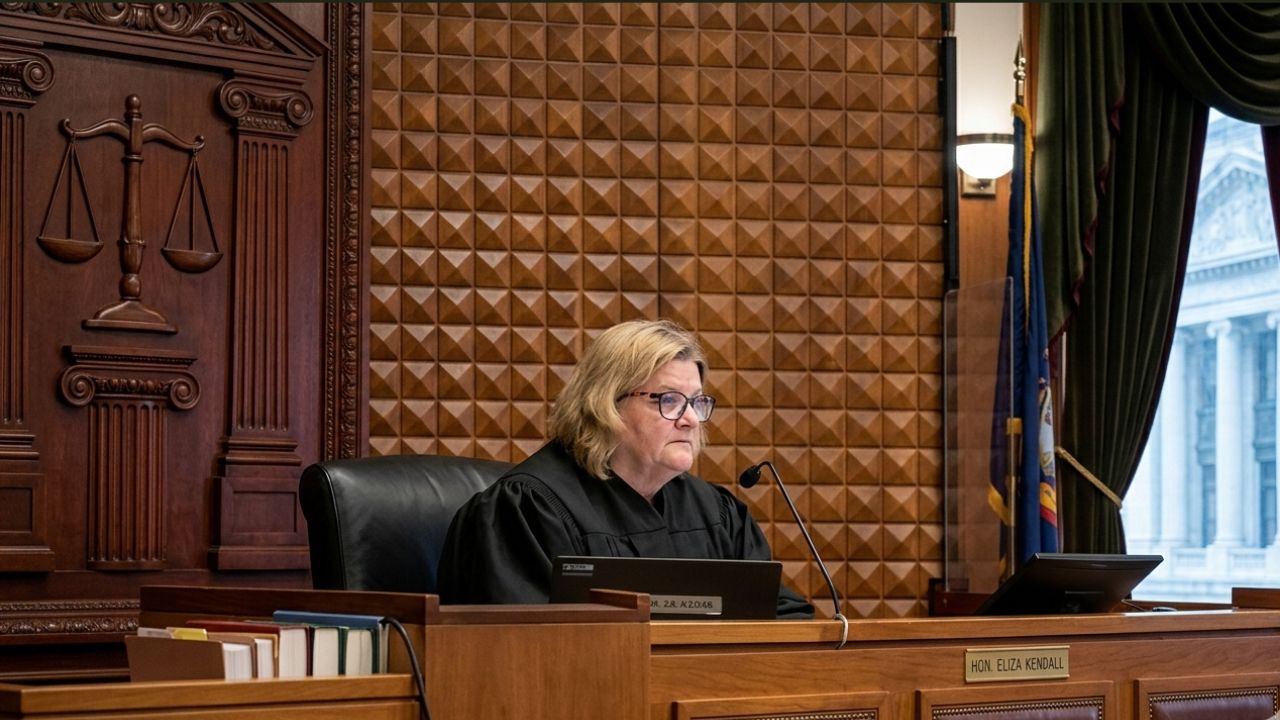
Key Points
- A federal jury in Milwaukee convicted Milwaukee County Circuit Court Judge Hannah Dugan of felony obstruction of a federal proceeding on December 18, 2025, but acquitted her of a related misdemeanor charge of concealing an individual from arrest.
- The case arose from events on April 18, 2025, when Dugan interacted with ICE agents attempting an administrative arrest of a defendant in her courtroom.
- Dugan resigned from the bench in January 2026; post-trial motions for acquittal or a new trial remain pending before U.S. District Judge Lynn Adelman as of March 2026, with no sentencing date set.
- Evidence leans toward this being the first time a sitting state judge faced trial and conviction on such federal obstruction charges tied to courthouse interactions with immigration agents.
- The outcome highlights tensions between state judicial operations and federal immigration enforcement, though interpretations of the judge’s intent and authority continue to be debated by legal experts on both sides.
What Happened: On April 18, 2025, Eduardo Flores-Ruiz appeared in Judge Dugan’s Milwaukee County courtroom for a misdemeanor battery hearing. Federal immigration agents were present with an administrative warrant to arrest him for unlawful re-entry. According to trial testimony and court records, Dugan confronted the agents in the hallway, questioned their authority without a judicial warrant, directed them to the chief judge’s office, and later moved the defendant’s case forward before escorting him and his attorney through a side door typically reserved for jurors. Agents pursued and arrested Flores-Ruiz shortly afterward outside the building. Dugan was indicted in April 2025 and arrested the following week.
Current Status: The conviction stands on the felony count under 18 U.S.C. § 1505, which prohibits corruptly obstructing or impeding a pending federal proceeding. Sentencing remains unscheduled pending resolution of defense motions filed January 30, 2026, arguing judicial immunity and insufficient evidence of corrupt intent. Prosecutors have opposed the motions, describing some arguments as “absurd.” The case is before U.S. District Judge Lynn Adelman in the Eastern District of Wisconsin.
Why It Matters This wisconsin judge hannah dugan obstruction case: raises questions about courthouse safety protocols, judicial discretion in managing court proceedings, and the limits of federal enforcement actions in state facilities. It affects how courts nationwide may handle similar situations involving immigration agents. For more, see resources from the U.S. District Court for the Eastern District of Wisconsin and the Department of Homeland Security announcements on the underlying removal.
In a development that has drawn national attention to the intersection of state court operations and federal immigration enforcement, a federal jury convicted Milwaukee County Circuit Court Judge Hannah Dugan of felony obstruction following a high-profile trial in December 2025. The wisconsin judge hannah dugan obstruction case centers on actions taken by Dugan on April 18, 2025, inside the Milwaukee County Courthouse, where federal agents sought to arrest a defendant appearing before her.
This article provides a factual overview of the events, legal framework, trial proceedings, and ongoing implications, drawing exclusively from court records, official filings, and reporting by established news outlets. It is for informational purposes only and does not constitute legal advice. Readers facing similar situations should consult qualified counsel.
Background & Legal Context
The wisconsin judge hannah dugan obstruction case unfolded against a backdrop of intensified federal immigration enforcement following the 2024 presidential election. On April 18, 2025, Eduardo Flores-Ruiz, a 31-year-old Mexican national who had re-entered the United States unlawfully after a prior deportation, appeared in Judge Dugan’s misdemeanor courtroom on the sixth floor of the Milwaukee County Courthouse. He faced state battery charges.
Federal agents from U.S. Immigration and Customs Enforcement (ICE), assisted by deputized FBI personnel, arrived with an administrative warrant authorizing his arrest for immigration violations. Administrative warrants, issued by ICE rather than a judge, are standard for civil immigration enforcement but differ from criminal judicial warrants. Trial evidence showed agents positioned themselves in the public hallway outside Dugan’s courtroom.
According to testimony detailed in court filings and contemporaneous reporting, Dugan learned of the agents’ presence from her clerk. She exited the courtroom, confronted the agents—describing their demeanor in hallway interactions as tense—and questioned whether they possessed a judicial warrant. When informed they held an administrative warrant, Dugan directed them to report to Chief Judge Carl Ashley’s office, citing ongoing courthouse policy discussions about handling federal arrests. She then returned, called Flores-Ruiz’s case earlier than scheduled, informed him the hearing would be rescheduled, and escorted him and his attorney through a non-public jury door leading to a private hallway. The group re-emerged into a public area, where agents followed and ultimately arrested Flores-Ruiz after a brief chase outside the courthouse. Flores-Ruiz was later removed from the United States.
Federal prosecutors charged Dugan on April 24, 2025, via indictment in the U.S. District Court for the Eastern District of Wisconsin (Case No. 2:25-cr-00089). The charges stemmed from 18 U.S.C. § 1505 (obstruction of proceedings before federal departments or agencies) and 18 U.S.C. § 1071 (concealing an individual to prevent discovery or arrest). Pretrial motions asserting judicial immunity were denied by U.S. District Judge Lynn Adelman.
The legal context draws on established principles: courthouses are public spaces where federal agents may execute valid warrants, yet state judges retain authority to manage their courtrooms. The defense maintained Dugan acted within routine judicial discretion to maintain order and follow perceived courthouse protocols; prosecutors argued her steps intentionally impeded a federal administrative proceeding.
Key Legal Issues Explained
Two core statutes formed the basis of the wisconsin judge hannah dugan obstruction case:
- 18 U.S.C. § 1505 (Felony Obstruction): Prohibits anyone from “corruptly” influencing, obstructing, or impeding a pending proceeding before a federal department or agency, such as an ICE arrest operation. “Corruptly” is defined to include acting with an improper purpose, including through misleading statements or physical actions. Maximum penalty: up to five years in prison and substantial fines.
- 18 U.S.C. § 1071 (Misdemeanor Concealment): Criminalizes concealing or harboring a person for whom an arrest warrant has been issued to prevent discovery or arrest. Maximum penalty: up to one year.
The jury’s split verdict—guilty on the felony but not guilty on the misdemeanor—turned on whether Dugan’s actions met the “corrupt” intent threshold for obstruction without rising to active concealment. Defense attorneys argued no corrupt purpose existed, citing Dugan’s long service as a judge and her belief that agents required a judicial warrant for courthouse arrests. Prosecutors countered with evidence of five specific acts: confronting agents, directing them away, advancing the case calendar, and using the side door.
Pretrial rulings rejected claims of absolute judicial immunity for criminal acts, consistent with precedents distinguishing official acts from obstructive conduct. The case also touched on courthouse security policies; Chief Judge Ashley had been drafting guidelines for federal arrests, but no formal prohibition existed at the time.
| Charge | Statute | Key Elements Proved at Trial (Per Jury) | Penalty Range | Verdict |
|---|---|---|---|---|
| Obstruction of Federal Proceeding | 18 U.S.C. § 1505 | Corrupt intent to impede ICE administrative arrest via physical direction and misleading statements | Up to 5 years imprisonment; fines up to $250,000+ | Guilty |
| Concealing Individual from Arrest | 18 U.S.C. § 1071 | Active concealment or harboring to prevent arrest | Up to 1 year imprisonment | Not Guilty |
This table illustrates the narrow legal distinction that defined the outcome.
Latest Developments or Case Status
The four-day jury trial ran from December 15 to December 18, 2025, in Milwaukee. After more than six hours of deliberation, the jury returned the split verdict on December 18. Nineteen government witnesses testified, including ICE agents and fellow Judge Kristela Cervera, who described Dugan’s demeanor as agitated. The defense presented character witnesses, including former Milwaukee Mayor Tom Barrett, but Dugan did not testify.
Dugan resigned her judicial seat effective immediately in a January 2026 letter to Governor Tony Evers, citing the “unprecedented federal legal proceedings.” On January 30, 2026, her attorneys filed post-trial motions seeking acquittal or a new trial.
Key arguments included:
(1) Judicial immunity for discretionary acts.
(2) Insufficient evidence of corrupt intent or knowledge of the specific arrest target.
(3) Error in the trial judge’s response to a jury question about knowledge requirements.
(4) The unprecedented nature of convicting a judge for courtroom management.
Federal prosecutors filed opposition briefs in February 2026, urging rejection of the motions. As of March 1, 2026, Dugan’s reply deadline is March 6, after which Judge Adelman is expected to rule. No sentencing hearing or presentence investigation has been scheduled—an unusual procedural step. Appeals to the U.S. Court of Appeals for the Seventh Circuit remain possible following final judgment.
Who Is Affected & Potential Impact
The wisconsin judge hannah dugan obstruction case directly impacts:
- State court judges and staff nationwide: Heightened awareness of interactions with federal agents may prompt revised courthouse protocols for immigration arrests.
- Immigration enforcement operations: The verdict reinforces that administrative arrests can occur in public courthouse spaces, though disputes over judicial warrants persist.
- Defendants and litigants: Some advocacy groups have expressed concern that high-profile prosecutions could deter immigrants from attending court proceedings, affecting access to justice.
- The public: The case underscores ongoing debates about federal-state authority balance in immigration matters.
Potential consequences include policy changes in Wisconsin counties and elsewhere regarding ICE presence in courthouses. Flores-Ruiz’s removal proceeded independently. Dugan faces professional repercussions beyond resignation, including possible bar discipline, though none has been publicly reported.
What This Means Going Forward
Legally, the conviction—if upheld—establishes a precedent that judges are not categorically immune from federal obstruction charges when their courtroom actions impede agency proceedings. It may influence how courts interpret “corrupt intent” in similar contexts.
Practically, readers should monitor developments in U.S. v. Dugan (Eastern District of Wisconsin) for rulings on post-trial motions and any sentencing. Broader impacts could include legislative efforts at the state or federal level to clarify rules for federal arrests in courthouses. Legal observers note this as one of several flashpoints in judicial-federal enforcement relations.
Professionals in law, immigration practice, or court administration are advised to review local policies and consult bar association guidance.
Conclusion
The wisconsin judge hannah dugan obstruction case illustrates the complex interplay between judicial independence, courtroom management, and federal law enforcement priorities. With post-trial motions still pending and no sentencing date set, the full legal significance continues to develop. Staying informed through official court sources and reputable legal reporting remains the best way for the public, legal professionals, and policymakers to understand evolving implications.
This article is based on verified court records and contemporaneous reporting as of March 2026. Future developments may alter the landscape.
Frequently Asked Questions
What exactly was Judge Dugan convicted of in the Wisconsin judge Hannah Dugan obstruction case?
She was convicted of felony obstruction under 18 U.S.C. § 1505 for impeding a federal immigration proceeding. She was acquitted of misdemeanor concealment.
Did Judge Dugan help the defendant escape?
The jury found insufficient evidence for concealment but determined her actions obstructed the agents’ efforts. Testimony described use of a side door and redirection of agents.
Why was no sentencing date set immediately after the verdict?
U.S. District Judge Lynn Adelman deferred pending post-trial motions, an atypical but permissible procedural choice to address defense challenges first.
Can judges be prosecuted for actions in their courtroom?
Yes, when those actions are alleged to violate federal criminal statutes. Pretrial rulings in this case rejected broad judicial immunity claims.
What happens if the conviction is overturned?
The government could appeal, or a new trial could be ordered. If upheld, Dugan faces up to five years in prison, though her clean record and community service may influence any sentence.
Where can I find official case documents?
Public dockets are available through the U.S. District Court for the Eastern District of Wisconsin (PACER) or summarized on clearinghouse sites tracking civil rights and immigration cases.
You May Also Like: Facfe Case Studies: Real-World Examples and Lessons Learned