
 By As Law Online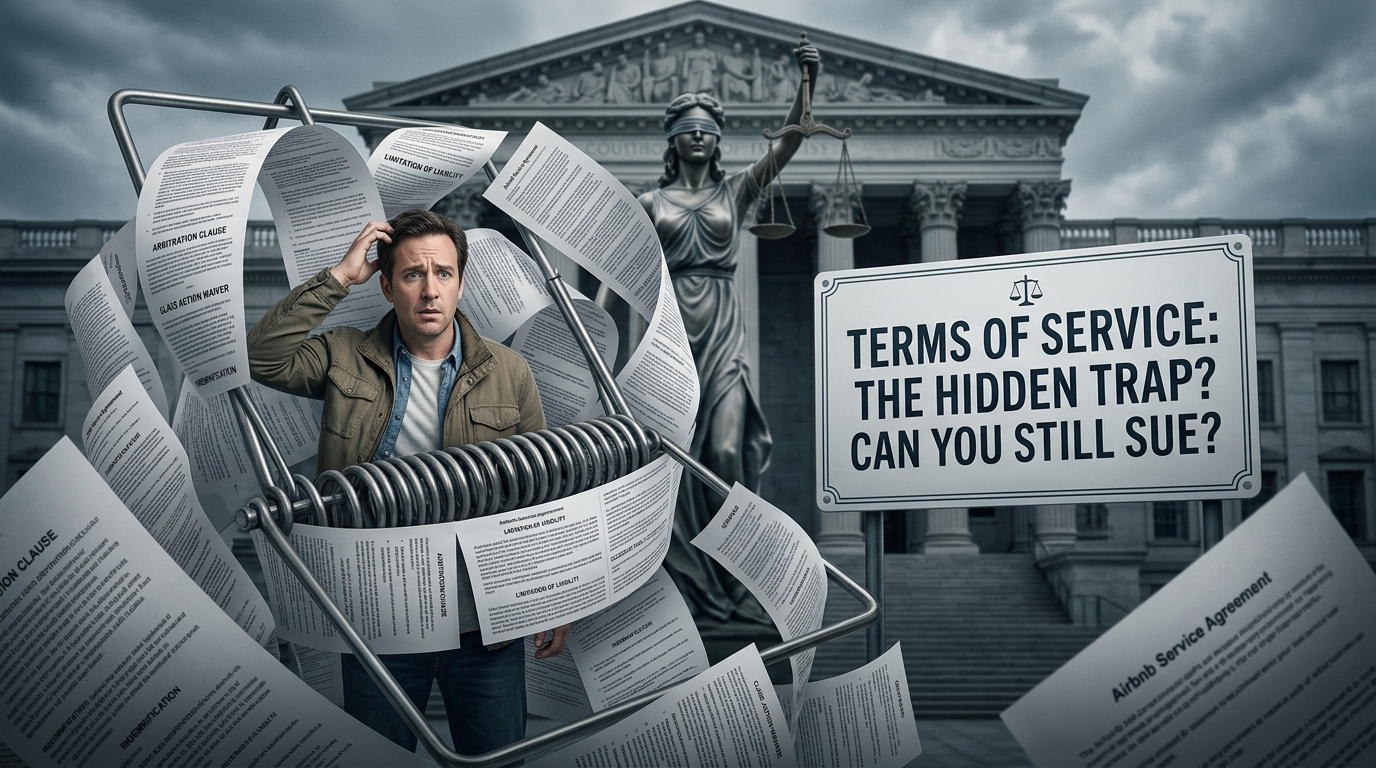
You might be reading this after something went very wrong during an Airbnb stay. Maybe you were injured on a broken staircase, slipped on a wet floor, or were hurt because the property was not as safe as advertised. At first, you may have thought, “I can sue. This seems straightforward.” Then you started reading about Airbnb’s Terms of Service and arbitration clauses, and suddenly the situation felt much more complicated. Dolan Dobrinsky Rosenblum Bluestein, LLP can help you understand your legal options and determine the best path forward.
Contact Our Lawyers
Dolan Dobrinsky Rosenblum Bluestein, LLP
2665 S Bayshore Dr., Suite 603
Miami, Florida 33133
That sinking feeling you have is very real. It is hard enough dealing with pain, medical bills, and missed work. When you add confusing legal language and the fear that you “signed away” your rights with a single click, the stress can feel overwhelming. You may be asking yourself if you even still have a path to justice.
Here is the short version. Airbnb’s Terms of Service often contain a mandatory arbitration clause and a waiver of class actions. These terms do not always mean you “cannot sue” at all, but they can change where and how your dispute is heard. In some cases you may still be able to file a lawsuit in court. In other cases you may be pushed into private arbitration. Understanding which situation you are in is the first step toward protecting yourself.
What is Airbnb’s arbitration trap and why does it matter for your injury claim?
Most people create an Airbnb account in a hurry. You want a place to stay, you see a big “Agree and Continue” button, and you click. Hidden behind that button is a long contract that includes what many lawyers call an Airbnb lawsuit waiver through mandatory arbitration and class action waivers.
Arbitration is a private dispute process, usually run by a private company instead of a public court. The Consumer Financial Protection Bureau describes arbitration as a system where an arbitrator acts like a private judge and issues a binding decision. You can see a clear explanation of how arbitration works in other consumer settings in the CFPB’s discussion of what arbitration is and how it affects a mortgage loan. Although that example is about mortgages, the core idea is the same. When you agree to arbitration, you are usually agreeing not to take your case to a regular court.
Because of this, many injured guests panic when they realize they accepted Airbnb’s Terms of Service. You may worry that you have no leverage, that you must accept whatever Airbnb or a host offers, or that you will never have your story fully heard. That fear is understandable, especially when you are dealing with pain and medical costs at the same time.
So, where does that leave you if you want to bring a personal injury claim against Airbnb or a host after you clicked “I agree” without reading every line?
How do mandatory arbitration and lawsuit waivers actually work with Airbnb?
To understand your options, it helps to slow the situation down and look at a few key pieces. The law around arbitration is complicated, and even judges and scholars debate how far these clauses should go. For example, a law review article from the University of Georgia School of Law examines how courts interpret these types of consumer contracts and when they may be limited or unenforceable. You can read more about that kind of analysis in this legal scholarship on arbitration and contract enforcement.
In everyday terms, here is what usually happens with a platform like Airbnb.
You create an account and agree to Terms of Service that say disputes must go to binding arbitration, often one on one, and not as part of a class action. You might also see language that tries to limit where claims can be brought and what kind of damages are allowed. These same types of provisions appear in many consumer contracts. The CFPB has described “mandatory binding arbitration” in auto purchase agreements, which is very similar in spirit, in its guide on mandatory binding arbitration in auto purchase agreements.
This raises a hard question. If you are hurt due to a dangerous condition at an Airbnb property, can Airbnb or the host force you into private arbitration instead of a public court? Often they will try. Whether they succeed depends on several factors.
- Exactly what the Terms of Service said when you agreed.
- Whether your claim “arises out of” or “relates to” your use of the platform.
- Which state’s law applies to your situation.
- Whether any part of the clause is unconscionable or against public policy.
The CFPB’s large arbitration study report to Congress shows that many consumers are unaware they agreed to arbitration at all. That lack of awareness does not always make the clause invalid, but it does show how unfair the situation can feel when you are injured and only then learn what you “signed.”
You might be wondering if there are any cracks in this wall. Sometimes there are. Courts do not automatically enforce every arbitration clause. In some settings, judges have found parts of these agreements too one sided or confusing to enforce. In other cases, the wording of the clause simply does not cover the exact type of claim you have. A skilled personal injury lawyer can examine those details and tell you if you still have a path into court, or if your best move is to fight within the arbitration process itself.
How does arbitration compare to going to court after an Airbnb injury?
To decide what to do next, it helps to understand how arbitration compares with a traditional lawsuit. Both paths have tradeoffs. Neither is automatically good or bad for you. What matters is how they fit your specific injury, your evidence, and your goals.
| Issue | Arbitration under Airbnb Terms | Court Lawsuit for Personal Injury |
|---|---|---|
| Public vs private | Usually private. Hearings and results are not public, which can limit pressure on the company. | Public record. Filings and outcomes can be seen by others, which can increase accountability. |
| Speed of resolution | Often faster because procedures are simplified. | Can be slower due to court schedules and formal rules. |
| Costs and fees | Filing fees may be high, though sometimes shared or shifted. Rules vary by provider. | Court filing fees are usually lower. Other costs still exist, like experts and discovery. |
| Right to appeal | Very limited. Arbitration awards are hard to overturn. | More structured appeal rights if the judge makes a legal error. |
| Jury involvement | No jury. A single arbitrator or small panel makes the decision. | You can request a jury and have community members hear your story. |
| Class actions | Usually waived. You must proceed alone. | Class actions may be available in suitable cases. |
Seeing this comparison, you can understand why many people feel uneasy about mandatory arbitration. It can feel like the deck is stacked before you even start. At the same time, some injured guests do resolve disputes successfully through arbitration, especially when they have strong evidence and legal guidance.
So, how do you move from feeling trapped by fine print to feeling that you have a plan?
What immediate steps can you take if you were hurt at an Airbnb?
Even if you are unsure whether you can file a lawsuit or must arbitrate, there are concrete steps you can take right now to protect your rights and your health.
1. Get medical care and document everything
Your health comes first. Seek medical attention as soon as possible, even if you think the injury is “not that bad.” Medical records created close in time to the incident are powerful evidence. Take clear photos and videos of the hazard that caused your injury. Save messages with the host or with Airbnb. Write down what happened while it is still fresh in your mind, including dates, times, and the names of any witnesses.
2. Preserve all communications and account records
Do not delete the Airbnb app or your account. Screenshots of the listing, reviews that mention safety issues, and your booking confirmation can all matter. If Airbnb or the host messages you, stay polite and factual, but avoid making statements that blame yourself before you understand the legal picture. Keep copies of any incident reports or insurance documents you receive.
3. Talk with a personal injury lawyer about your options
This is where professional guidance can change the path of your case. A personal injury lawyer can review the specific Airbnb Terms of Service that applied when you booked, look at where the property is located, and explain whether the arbitration clause is likely to be enforced. They can also tell you if there are creative ways to file in court, or if your strongest move is to push for the best possible result in arbitration.
Many lawyers offer free initial consultations. That conversation can help you understand deadlines, such as the statute of limitations, and the practical pros and cons of different approaches. You should not have to carry the burden of decoding fine print alone while you are trying to heal.
Where do you go from here if you feel trapped by Airbnb’s fine print?
Feeling blindsided by arbitration and an Airbnb injury claim clause is completely understandable. You did not set out to sign a complex legal contract. You just wanted a safe place to stay. The fact that the rules are complicated does not mean you are powerless. It means you need clear information and steady guidance.
You can start by caring for your health, gathering evidence, and speaking with a knowledgeable personal injury lawyer who understands how these clauses work. From there, you can decide together whether to challenge the arbitration clause, proceed in arbitration strategically, or explore other paths to compensation.
You do not have to have all the answers today. You only need to take the next right step for your safety and your future.