
 By As Law Online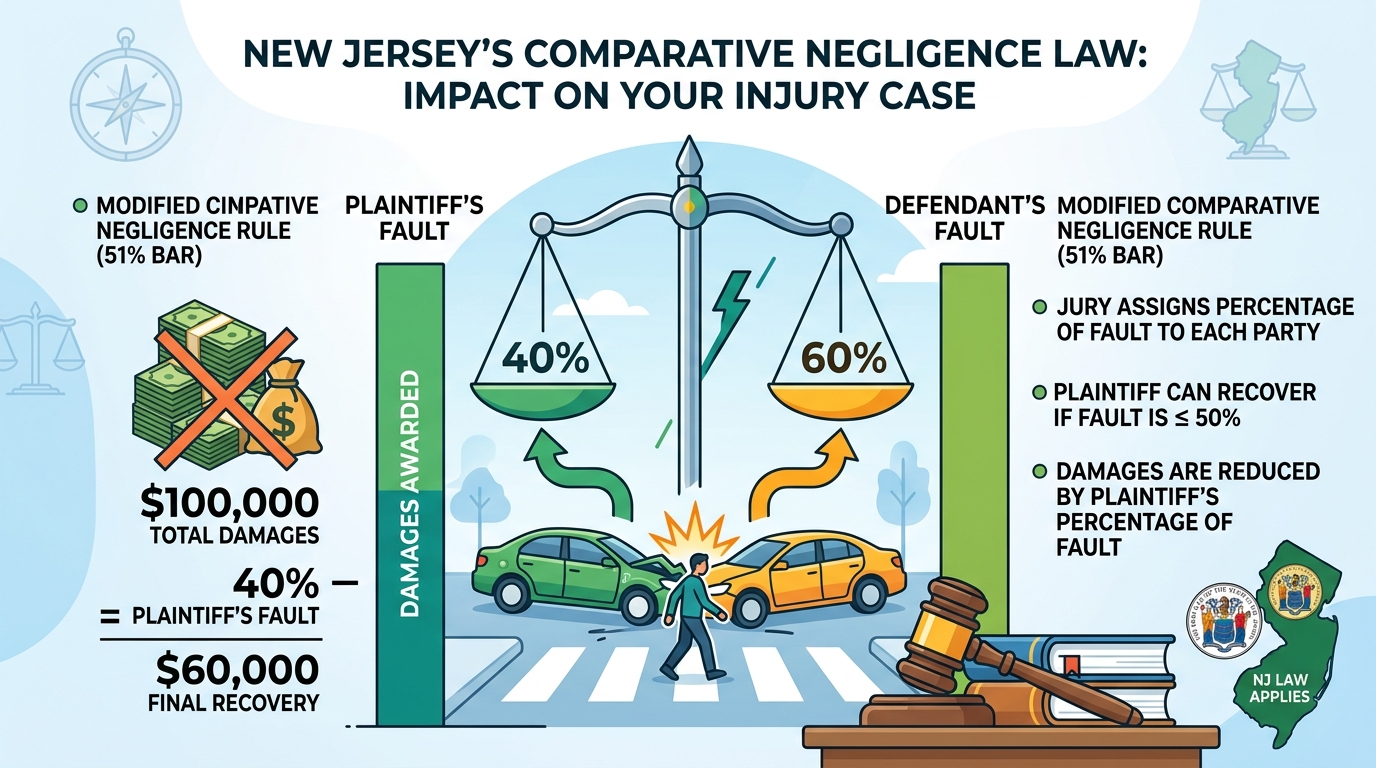
You might be trying to sort through medical bills, insurance calls, and pain that will not quite let you sleep, all while wondering if you somehow did something “wrong” that could ruin your claim. Maybe an adjuster has already hinted that you were “partly at fault,” and now you are worried that this one phrase could cost you everything. Sattiraju & Tharney
That worry is understandable. After an accident, life splits into a very clear “before” and “after,” and on top of the physical and emotional shock, New Jersey’s comparative negligence rules can feel like a confusing math problem dropped in your lap. You may be thinking, “If they say I was 30 percent at fault, do I still get anything? What if they say 60 percent?”
Here is the short version. New Jersey uses a system called comparative negligence. Your compensation can be reduced if you share some blame, and if your share of fault is higher than the other party’s, you may recover nothing. How that percentage is assigned can decide whether you receive meaningful help with your medical costs and lost income, or walk away with far less than you need.
So, where does that leave you? It means understanding how New Jersey’s comparative negligence law works is not just “legal knowledge.” It is a way to protect your recovery, your family’s stability, and your sense of fairness after everything you have already been through.
What does comparative negligence in New Jersey really mean for you?
Comparative negligence is a rule courts use to answer a hard question. When more than one person contributed to an accident, how should money for injuries be divided up in a way that feels reasonably fair?
In New Jersey, this is sometimes called “modified comparative negligence” or the “51 percent rule.” If you are 50 percent or less at fault, you can still recover money, but the amount is reduced by your percentage of fault. If you are more than 50 percent at fault, you recover nothing from the other party. You can read a plain language explanation of this general concept on the comparative negligence overview from Cornell Law School.
That sounds simple on paper. In real life, it is rarely that clean. Insurance companies know that every extra percentage of blame placed on you reduces what they must pay, so there is a built-in tension between your need for full and fair compensation and their interest in keeping payouts low.
So how do these percentages actually play out in your injury case?
How fault percentages can shrink or erase your recovery
Imagine you were rear-ended at a traffic light but one of your brake lights was out. You suffer a back injury and your total damages are valued at 100,000 dollars. The insurance company might argue that you were 20 percent at fault because of the broken brake light. If a jury agrees, your recovery is reduced to 80,000 dollars. You still recover, but not the full amount.
Now take a slip and fall in a grocery store. The floor is wet with no warning sign, but you were looking at your phone. If your damages are 60,000 dollars and you are found 50 percent at fault, you could still receive 30,000 dollars. If the same facts lead to a finding that you were 55 percent at fault, you get zero from the store, even though they clearly did something wrong too.
This is where the concern really starts to bite. Those percentage points are not abstract. They can be the difference between paying for a needed surgery or putting it off. They can decide whether you keep your home or slip into debt while you try to heal.
Because of this tension, you might wonder how these numbers are actually decided and who gets to make the call.
Who decides your share of fault and how do they do it?
Fault is usually negotiated first between your lawyer and the insurance company. If the case settles, the final percentage is often the product of argument, evidence, and pressure from both sides. If there is no agreement and the case goes to trial, a jury or judge decides your percentage of fault based on the evidence presented.
They will look at things like police reports, witness statements, photos, videos, accident reconstruction, and your own testimony. In some cases, even small details can shift how people see responsibility. For example, was there a clear warning sign, were you speeding slightly, did the other driver run a red light, or had the property owner ignored a known hazard for weeks.
Insurance companies in New Jersey know these rules very well. The state’s own resources, such as the New Jersey insurance FAQ from the Department of Banking and Insurance, show how often consumers have questions and disputes about accident claims. Those disputes often circle around one central issue. How much fault is being placed on the injured person.
So, what does that mean for your choices right now?
Comparing your options: handling a comparative negligence claim alone or with help
Some people think about handling their injury claim on their own. Others decide to work with a personal injury lawyer familiar with comparative negligence in NJ injury cases. The right path depends on your injuries, the complexity of the accident, and your own comfort level with evidence and negotiation.
The table below lays out some key differences that matter when fault is disputed.
| Issue | Handling Claim On Your Own | Working With a Personal Injury Lawyer |
|---|---|---|
| Understanding fault rules | Rely on your own research and what the adjuster tells you about comparative negligence | Guidance from someone who applies New Jersey’s comparative negligence law in real disputes |
| Gathering and preserving evidence | May collect photos and basic records, but risk missing key proof that reduces your fault | Structured approach to witness statements, expert opinions, and records to challenge inflated fault claims |
| Negotiating percentages of fault | Negotiate directly with a trained adjuster whose job is to minimize payout | Negotiation informed by prior cases and a clear understanding of what juries might do |
| Valuing your claim | May focus mainly on medical bills and miss future losses or pain and suffering | Full valuation that includes long term medical needs, lost earning capacity, and non economic harm |
| Risk of being found over 50% at fault | Higher risk of accepting an unfair fault split that wipes out your recovery | Better positioned to push back on attempts to cross the 51 percent threshold |
| Stress and time investment | Heavy personal burden while you are trying to heal and manage daily life | Much of the burden is shifted off your shoulders so you can focus on recovery |
New Jersey’s legal system can feel formal and distant, but there are resources to help you understand your rights and the court process. The state’s own site offers general legal process information in its New Jersey Legislature FAQ, which can give you background on how laws are created and applied.
Still, background information is different from having someone in your corner who uses these rules every day. This is where working with a personal injury lawyer can shift the balance in your favor.
Three practical steps you can take today to protect your injury claim
1. Write down what happened while it is still fresh
Memory fades faster than most people realize. Take time to write a detailed account of the accident. Include the time of day, weather, lighting, traffic or crowd conditions, what you were doing immediately before the incident, and exactly what you noticed about the other person’s behavior. Note anything that shows you were being careful, such as driving within the speed limit or watching where you were walking.
2. Gather and organize every piece of evidence you can
Collect photos, videos, contact information for witnesses, medical records, repair estimates, and any messages or letters from insurance companies. Create a simple folder or binder. This is not just paperwork. These pieces can help push your assigned fault percentage down and your recovery up. If you feel overwhelmed, remember you do not need to sort everything perfectly. Just getting it all in one place is a strong start.
3. Talk with a lawyer before you accept any fault or settlement
Insurance adjusters may sound friendly and reasonable, but their questions are often designed to gather statements that increase your share of blame. Before you agree that you were “partly responsible” or sign a settlement offer, take time to speak with someone who knows how comparative negligence rules really play out. A brief consultation can help you understand whether the proposed fault split is fair or whether you are being pushed above that critical 51 percent line.
Moving forward when fault is being questioned
It is hard enough to recover from an injury when everyone agrees you were an innocent victim. When someone starts pointing the finger at you, the emotional weight can feel even heavier. You might feel angry, ashamed, or simply worn out from having to defend yourself while you are still in pain.
You do not have to carry that alone. Understanding how New Jersey’s comparative negligence law affects your case gives you a clearer picture of what is at stake and what you can do about it. From preserving evidence to challenging unfair fault claims to working with a personal injury lawyer when the situation calls for it, you have options and you have a path forward.
You deserve the space to heal and the chance to be treated fairly under the law. Taking even one small step today, whether that is writing down your story, organizing your records, or reaching out for legal guidance, can start to shift this process from something that is happening to you into something you are actively and calmly managing.