
 By As Law Online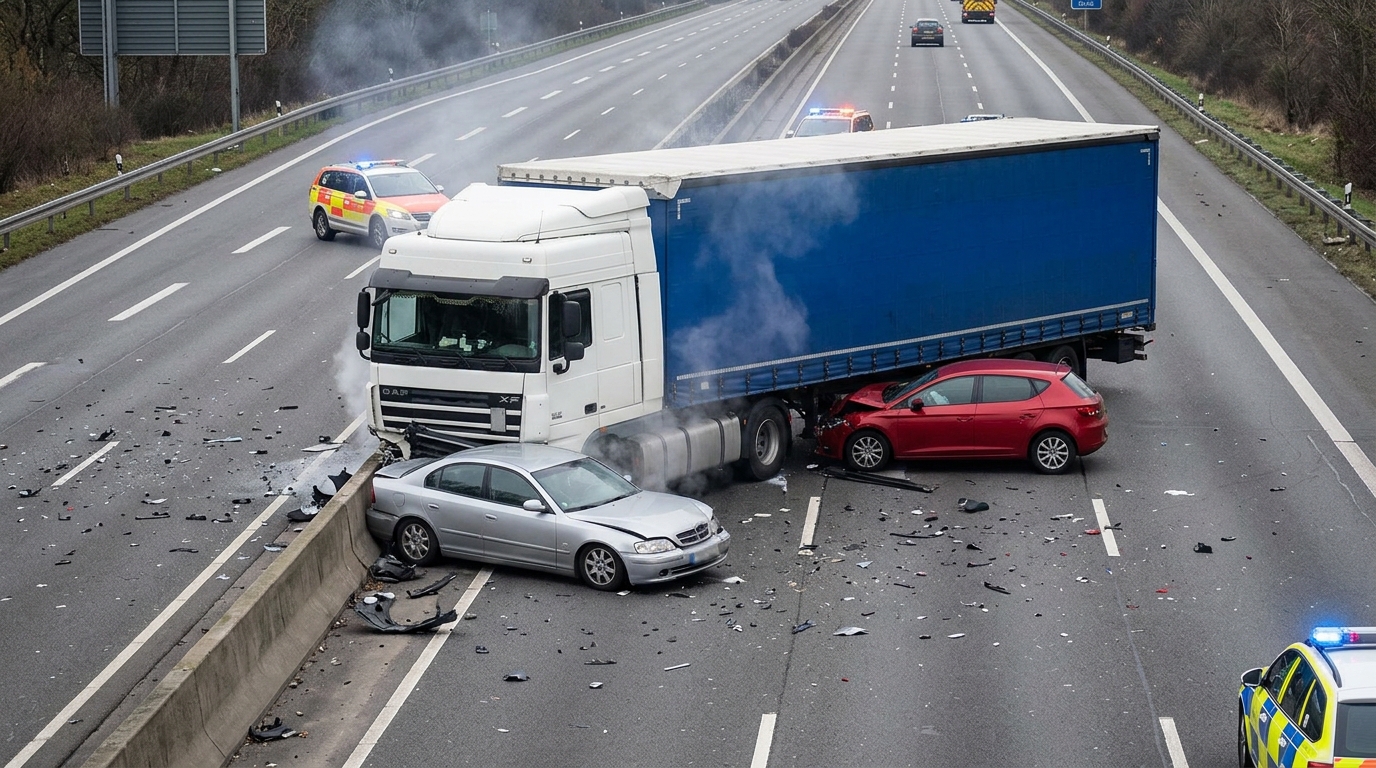
You might be feeling like your life got split into “before the crash” and “after the crash.” One moment you were just driving, maybe heading home or to work, and the next you were staring at a massive truck, broken glass, and flashing lights. Now you are dealing with medical appointments, insurance calls, and questions you never thought you would have to answer. Brian Boyer Injury Firm’s truck accident team can help you navigate what comes next.
If you are comparing your situation to a “normal” car accident and wondering why everything feels heavier, slower, and more confusing, you are not imagining it. Truck accident claims are more complicated than typical car accident cases, and that complexity affects how long your case takes, how much evidence you need, and what kind of outcome you can expect.
Here is the short version. Crashes involving large trucks often cause more severe injuries. They involve more parties, more insurance policies, and more regulations. There is usually more money at stake, so the pushback is stronger. Understanding these differences is the first step toward protecting yourself and your future.
Why does a truck crash feel so different from a regular car accident?
After a standard car accident, you might exchange information, call your insurer, maybe see a doctor, and then wait for the claim to work itself out. It is stressful, but at least the process feels somewhat familiar.
With a truck collision, everything changes. You might be facing surgery, months of physical therapy, or time off work you cannot afford. The vehicle damage is often much worse. Your car may be totaled. On top of that, you may start hearing about “the trucking company’s legal team,” “federal regulations,” and “data from the truck’s black box.” It is a different world.
So where does that leave you? It leaves you in a place where treating your crash like a normal fender bender can cost you a lot, both financially and medically.
What makes truck accident cases legally and practically more complex?
To understand why a commercial truck collision claim is so different from a regular car accident, it helps to look at a few key areas that almost always come into play.
1. The size and force of large trucks change everything
A fully loaded tractor trailer can weigh up to 80,000 pounds. A typical passenger car weighs around 3,000 to 4,000 pounds. That difference in size means the impact forces are much higher, and the injuries tend to be more severe. According to federal safety data, crashes with large trucks and buses are involved in a significant share of serious and fatal roadway injuries each year. You can see more detail in the Federal Motor Carrier Safety Administration’s Large Truck and Bus Crash Facts.
More serious injuries mean longer treatment, higher medical bills, more time away from work, and more pressure on you and your family. That alone makes these cases different from minor car accidents where people walk away with a few bruises.
2. There are often multiple responsible parties
In a typical car accident, it is usually one driver versus another. In a truck crash, responsibility can spread across several players. The truck driver. The trucking company. The company that loaded the cargo. The maintenance contractor who serviced the brakes. The manufacturer of a failed part.
Imagine a situation where a truck driver was speeding to meet a delivery deadline, the trucking company pushed unrealistic schedules, and the trailer was overloaded by the shipper. If you only pursue one of those parties, you might miss a significant part of the compensation you deserve.
3. Federal and state regulations come into play
Truck drivers and trucking companies must follow a long list of safety rules that do not apply to everyday drivers. These include hours of service limits, maintenance standards, drug and alcohol testing, and cargo securement rules. A major study from the Federal Motor Carrier Safety Administration found that factors like driver fatigue, speeding, and improper loading play a big role in serious truck crashes. You can review key findings in the FMCSA’s Large Truck Crash Causation Study Analysis Brief.
When those rules are broken, it can strengthen your case. The challenge is that you need to know which regulations apply, how to prove violations, and how to connect those violations to what happened to you.
4. Critical evidence can disappear quickly
Most modern trucks carry electronic control modules and other devices that record speed, braking, hours driven, and more. There are also driver logs, inspection reports, dispatch records, and internal company communications. Some of this data is only kept for a short time. Some of it can be “lost” if no one sends a clear preservation request.
If you wait too long or rely only on the basic police report, you may lose key proof that could show the truck driver or company was at fault.
5. Insurance coverage and defenses are more aggressive
Trucking companies usually carry much higher insurance limits than individual drivers. That sounds like a good thing. It also means there is more money on the line, so insurers often fight harder. They may try to shift blame onto you, downplay your injuries, or offer quick settlements that look tempting when bills are piling up but do not come close to covering long term needs.
This is where many people feel overwhelmed. You are trying to heal while also navigating a complex system that seems designed to wear you down.
How do truck accident claims compare to typical car accident claims?
To make this more concrete, it can help to see a side by side view of how a truck accident case often differs from a standard car crash claim.
| Issue | Typical Car Accident Claim | Truck Accident Claim |
|---|---|---|
| Common Injuries | Mild to moderate injuries, often whiplash or soft tissue | Severe trauma, fractures, spinal injuries, brain injuries, wrongful death |
| Number of Parties Involved | Usually two drivers and their insurers | Driver, trucking company, cargo shipper, maintenance provider, manufacturers, multiple insurers |
| Key Laws and Rules | State traffic laws and basic negligence rules | State laws plus federal trucking regulations and company safety policies |
| Types of Evidence | Police report, photos, medical records, witness statements | All car crash evidence plus black box data, driver logs, GPS, maintenance records, company policies |
| Insurance Strategy | Personal auto insurance adjusters, smaller policy limits | Commercial insurers, higher limits, more aggressive defense teams |
| Case Timeline | Often months, sometimes a year | Often longer, especially with serious injuries or disputed liability |
Seeing these differences on one page makes it clearer why a truck crash should not be treated like “just another wreck.” The stakes are higher, the rules are different, and the path to a fair result is more demanding.
What can you do right now to protect yourself after a truck accident?
You may not control what happened on the road, but you do have a say in what happens next. Here are three practical steps you can take, even while you are still recovering.
1. Protect your health and create a clear medical record
Get medical care as soon as possible, even if you think you can “push through” the pain. Truck crashes often cause injuries that worsen over time, such as head, neck, or back problems. Follow through on treatment plans, attend follow up appointments, and keep copies of your records, prescriptions, and bills.
This is about more than documentation. It is about giving your body the best chance to heal. At the same time, a clear medical record connects your injuries to the crash, which is critical in any personal injury lawyer claim.
2. Preserve evidence before it disappears
If you can, keep photos from the scene, your damaged vehicle, your injuries, and anything else that shows what you went through. Save all communication from insurers or the trucking company. Avoid posting details about the crash on social media.
When possible, have someone send a written request to preserve evidence to the trucking company and its insurer. This helps protect data from the truck’s electronic systems, driver logs, and company records that may otherwise be deleted as part of normal business routines.
3. Talk with a lawyer who understands truck accidents, not just car crashes
Many people do not realize that truck cases require a different approach than basic fender benders. When you speak with a lawyer, ask directly about their experience with commercial truck claims, their understanding of federal trucking regulations, and how they handle multiple responsible parties.
A seasoned attorney can coordinate the investigation, work with experts, manage communication with insurers, and help you understand the true value of your case. That support can free you to focus on recovery while someone else handles the legal and financial pressure.
Finding a way forward after a truck crash
If you are feeling exhausted, scared, or simply unsure what comes next, that reaction is normal. A serious truck collision is not a small event. It affects your body, your income, your sense of safety on the road, and often your entire family.
The good news is that you do not have to sort out these complexities on your own. When you understand why truck accident cases are more complex than typical car accident claims, you can make clearer choices. You can push back when someone tries to rush you into a low settlement. You can ask better questions. You can insist on the care and respect you deserve.
You have already made it through the crash itself. With the right information and support, you can get through the legal and financial aftermath as well, one step at a time.