
 By As Law Online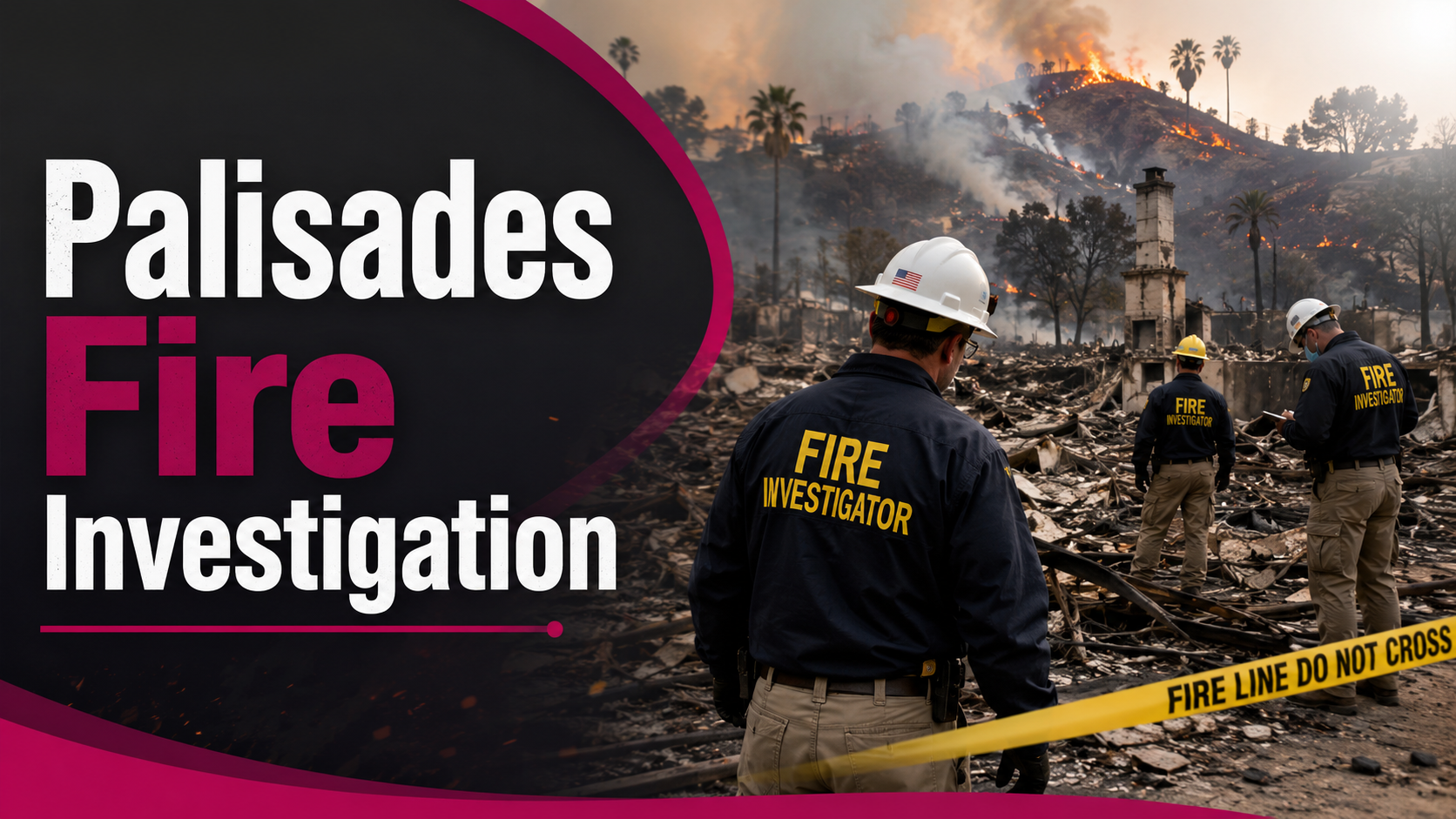
The Palisades Fire of January 2025 stands as one of the most destructive wildfires in Los Angeles history. It scorched more than 23,000 acres across Pacific Palisades, Malibu, and surrounding areas, destroyed or damaged thousands of structures, and claimed 12 lives. Federal investigators have determined that the blaze originated from a smaller January 1 fire, known as the Lachman Fire, that was not fully extinguished and later reignited under extreme wind conditions.
Authorities from the Bureau of Alcohol, Tobacco, Firearms and Explosives (ATF), the Los Angeles Fire Department (LAFD), California State Parks, and federal prosecutors have released findings on the origin, the alleged arson, response shortcomings, and related civil litigation. These revelations matter because they shape criminal accountability, civil claims by property owners and survivors, and reforms aimed at preventing similar failures in high-risk wildfire zones. Residents, insurers, local governments, and policymakers continue to track the investigations for clarity on liability, recovery funding, and operational changes.
This article examines the established facts from official investigations, court proceedings, and after-action reviews. It separates confirmed developments from ongoing disputes and avoids speculation. The information is drawn from public records, court filings, and statements by investigating agencies. This article is for informational purposes only and does not constitute legal advice.
Background and Legal Context
California wildfires operate under a complex framework of state and federal law. The California Department of Forestry and Fire Protection (CAL FIRE) and local departments such as the LAFD share primary responsibility for suppression on private and municipal land, while federal agencies handle certain public lands and criminal investigations involving interstate commerce or federal property. Arson on federal land or affecting interstate commerce can trigger federal charges under Title 18 of the U.S. Code.
The Lachman Fire began shortly after midnight on January 1, 2025, near a hilltop clearing in the Temescal Ridge area adjacent to the Summit neighborhood of Pacific Palisades. Environmental sensing platforms detected the ignition. LAFD crews responded and believed they had extinguished the surface fire. Investigators later determined that heat remained underground in root systems and dense vegetation. On January 7, intense Santa Ana winds caused the holdover fire to erupt into the full Palisades Fire.
The ATF National Response Team investigated the origin. Agents ruled out lightning (using data from the World Wide Lightning Location Network), power lines, cigarettes, and fireworks through scene examination, weather analysis, and laboratory testing. They concluded the cause was the introduction of an open flame, likely from a lighter, to combustible material.
In October 2025, federal authorities arrested Jonathan Rinderknecht, then 29 or 30, in Melbourne, Florida. Prosecutors charged him with three felony counts: destruction of property by means of fire, arson affecting property used in interstate commerce, and timber set afire. The maximum exposure exceeds 40 years if convicted. The complaint and subsequent trial evidence focused on cellphone location data placing him at the origin site, 911 call records, surveillance imagery from a nearby water tower, a recovered long-handled green BIC lighter with his DNA, and digital content on his devices.
Parallel civil actions began almost immediately. Thousands of property owners and survivors filed suits against the City of Los Angeles, the Los Angeles Department of Water and Power (LADWP), California State Parks, the Santa Monica Mountains Conservancy, and other public entities. The lead consolidated cases proceed in Los Angeles Superior Court under Judge Samantha P. Jessner. Plaintiffs allege negligence in extinguishing the Lachman Fire, inadequate pre-positioning of resources ahead of a predicted wind event, empty or under-maintained reservoirs that limited water supply, and failure to clear hazardous vegetation.
These claims invoke California Tort Claims Act procedures, which require timely government claims before suit, and theories of dangerous condition of public property and failure to warn. Government defendants have asserted immunities for discretionary decisions and first-responder actions. Discovery disputes have included allegations that State Parks withheld text messages and photographs documenting smoldering embers observed on January 2, 2025.
An independent review ordered by the Los Angeles City Council and internal LAFD Professional Standards Division examinations have examined command decisions, resource allocation, and report drafting. Congressional inquiries led by Senators Rick Scott and Ron Johnson have sought documents on preparedness and response.
Key Legal Issues Explained
Several core legal concepts define the investigations and related cases.
Origin and cause determination follows National Fire Protection Association standards and ATF protocols. Investigators establish the area of origin through burn patterns, witness statements, electronic data, and elimination of accidental or natural causes. Once origin is fixed, cause is classified as accidental, natural, undetermined, or incendiary. Here, the ATF classified the Lachman Fire as incendiary and linked the Palisades Fire as a continuation (holdover) rather than a separate ignition.
Arson under federal law requires proof of willful and malicious burning of property. Prosecutors must show the defendant intentionally set the fire and that it affected interstate commerce or federal land. Circumstantial evidence (location data, presence at the scene, possession of an ignition source, and post-event behavior) can support conviction even without an eyewitness or video of the act itself. The defense has emphasized the absence of direct physical proof of ignition and argued the possibility of separate causes or incomplete scene preservation.
Government liability in wildfire cases turns on whether public entities created or failed to correct a dangerous condition and whether that condition was a substantial factor in the harm. California law provides broad immunity for policy-level decisions (such as staffing levels or budget allocations) but narrower protection for operational failures once a known hazard exists. Water-supply claims often focus on whether reservoirs and hydrants were maintained in a condition adequate for foreseeable fire demand. Courts examine foreseeability of extreme wind events under red-flag warnings.
Discovery obligations require parties to produce relevant communications. Allegations of withheld State Parks texts describing visible smoldering have led to motions for independent forensic extraction of devices. Courts weigh relevance against privacy and privilege claims. Failure to preserve or produce can result in sanctions or adverse inferences at trial.
After-action reporting is an internal administrative process, not a formal adjudication. Drafting changes that soften language about resource shortfalls or policy deviations raise transparency questions but do not automatically establish legal liability. They can, however, become evidence in civil discovery or political oversight.
These principles operate independently. A criminal acquittal or mistrial does not bar civil claims, which use a lower preponderance-of-the-evidence standard. Conversely, a civil finding of government negligence does not determine criminal guilt.
Latest Developments or Case Status
The federal criminal trial of Rinderknecht began in June 2026 in U.S. District Court in Los Angeles before Judge Anne Hwang. Prosecutors presented cellphone records showing the defendant near the origin at the time of ignition, multiple 911 attempts from positions consistent with the trail, video he recorded of the fire, a recovered lighter, and expert testimony that the Lachman and Palisades fires were the same event. Agents described ruling out alternative causes through experiments and data analysis.
The defense challenged scene integrity, noting that protective measures were limited until after the January 7 reburn, and highlighted possible fireworks activity reported by other witnesses. After roughly 13 hours of deliberation, the jury reported a deadlock of 10 to 2 in favor of acquittal on all three counts. Judge Hwang declared a mistrial on June 26, 2026. Federal prosecutors announced their intention to retry the case, with a tentative date of October 19, 2026. Rinderknecht remains in custody.
On the civil side, Judge Jessner denied demurrers seeking dismissal of most claims against the City and State in February 2026, allowing the cases to proceed into deeper discovery. The City of Los Angeles filed a cross-complaint seeking contribution from State entities. Malibu filed its own suit seeking recovery for municipal losses. Discovery continues over text messages, deposition testimony from firefighters who observed residual heat at the Lachman site, and LADWP reservoir records.
LAFD’s October 2025 after-action review identified challenges including insufficient initial resources for red-flag conditions, communication difficulties, water-system limitations under extreme demand, and terrain that hindered access. Subsequent reporting revealed that earlier drafts contained stronger language about fiscal decisions that limited full pre-deployment and about the number of mechanically unavailable engines. Final language was revised. Incoming Fire Chief Moore acknowledged the softening and stated such editing would not recur. An independent investigation ordered by the City Council remains underway.
Cleanup and recovery phases have generated separate federal oversight reports alleging contractor violations involving contaminated soil and improper debris handling. Those issues remain under review by environmental regulators.
Who Is Affected and Potential Impact
Property owners whose homes and businesses were destroyed face the most immediate financial and personal consequences. Insured losses from the Palisades and concurrent Eaton fires exceeded tens of billions of dollars. Uninsured or underinsured residents pursue recovery through the consolidated civil actions. Survivors of the 12 fatalities and those alleging secondary harms (including later deaths claimed to be related) have additional claims under specialized statutes that temporarily expanded recoverable damages.
Local governments, particularly the City of Los Angeles and the City of Malibu, confront potential liability exposure, increased insurance costs, and demands for infrastructure investment. LADWP faces scrutiny over reservoir management and water pressure during the firefight. California State Parks confronts allegations related to land management and response coordination on or near state property.
Insurers and reinsurers adjust rates and coverage availability across high-risk Southern California zones. Rebuild processes involve permitting, debris removal standards, and funding from state and federal recovery programs. Residents still navigating reconstruction continue to press for transparency on what operational changes will prevent recurrence.
Broader public impact includes scrutiny of pre-positioning protocols during red-flag warnings, interagency coordination between municipal, state, and federal responders, and the balance between fiscal constraints and preparedness. Congressional investigations keep the matter in the national policy discussion.
Possible outcomes range from criminal conviction or acquittal on retrial, to civil settlements or judgments allocating responsibility among public entities, to administrative reforms in staffing, equipment readiness, and after-action reporting. No single proceeding will resolve every claim; parallel tracks address criminal accountability, tort compensation, and systemic improvement.
What This Means Going Forward
The Palisades Fire investigations underscore the legal and operational challenges of wildfire response in the wildland-urban interface. Confirmed findings establish a holdover origin from the Lachman Fire and a federal determination of incendiary cause. The criminal case remains unresolved after the mistrial, with a retrial scheduled. Civil litigation has survived early dismissal motions and continues into discovery and potential trial phases.
Readers should monitor three developments. First, the outcome of the federal retrial will clarify the strength of the circumstantial case against the charged individual. Second, discovery rulings and any sanctions related to document production will shape the evidentiary record available to civil plaintiffs. Third, final independent reviews of LAFD and interagency performance may produce recommendations that influence future resource allocation and mutual-aid agreements.
From a legal perspective, the matters illustrate how origin-and-cause determinations feed both criminal charging decisions and civil causation analyses. They also highlight the practical limits of government immunities when operational decisions intersect with known hazards under forecast extreme weather. Public entities retain significant protections for pure policy choices, yet courts continue to examine whether specific, foreseeable risks were addressed with reasonable care.
Industry observers and affected communities will watch whether reforms address documented issues such as incomplete extinguishment of surface fires in chaparral, pre-deployment thresholds during wind events, and water-system resilience. Transparency in after-action processes remains a recurring theme in oversight discussions.
Conclusion
Authorities have established that the Palisades Fire began as a holdover from an earlier, incompletely extinguished blaze of incendiary origin. Federal criminal proceedings against the charged individual remain pending after a mistrial. Parallel civil litigation and administrative reviews continue to examine response decisions, resource allocation, and interagency coordination. These processes serve distinct purposes: determining individual criminal liability, allocating civil responsibility for damages, and identifying operational improvements.
The public interest remains high because the scale of loss and the documented gaps in preparedness raise questions that extend beyond any single case. Accurate information from court records, agency reports, and ongoing investigations provides the foundation for accountability and reform. Residents, policymakers, and the legal community should continue following official updates from the U.S. Attorney’s Office, Los Angeles Superior Court, LAFD, and related oversight bodies as the matters progress.
Frequently Asked Questions
What caused the Palisades Fire according to investigators?
ATF investigators determined that the Palisades Fire was a holdover from the January 1, 2025 Lachman Fire. That earlier fire was classified as incendiary, started by an open flame applied to combustible material. Surface flames were suppressed, but underground heat persisted and reignited under Santa Ana winds on January 7.
Who is charged in connection with the fire?
Jonathan Rinderknecht faces three federal arson counts. His June 2026 trial ended in a mistrial after the jury deadlocked. Prosecutors intend to retry the case.
Can victims sue government agencies even if arson is proven?
Yes. Criminal responsibility of an individual does not automatically shield public entities from civil claims alleging negligence in response, resource deployment, or infrastructure maintenance. Courts evaluate each claim under applicable tort and immunity standards.
What did the LAFD after-action report conclude?
The October 2025 report described a perfect storm of extreme weather, terrain, vegetation, and water-system stress. It noted challenges with initial resource levels relative to conditions and communication. Later reporting showed that draft language critical of certain pre-deployment decisions was revised before public release.
Are there ongoing civil lawsuits?
Yes. Consolidated actions in Los Angeles Superior Court against the City of Los Angeles, LADWP, State of California entities, and others continue. Early motions to dismiss were largely denied. Discovery disputes over communications remain active.
What should affected residents monitor?
Key items include the federal retrial schedule, civil discovery and motion practice, independent review findings, and any legislative or administrative changes to wildfire preparedness protocols.
You May Also Like: Davies Arnold Cooper Law Firm: History and Legal Background