
 By As Law Online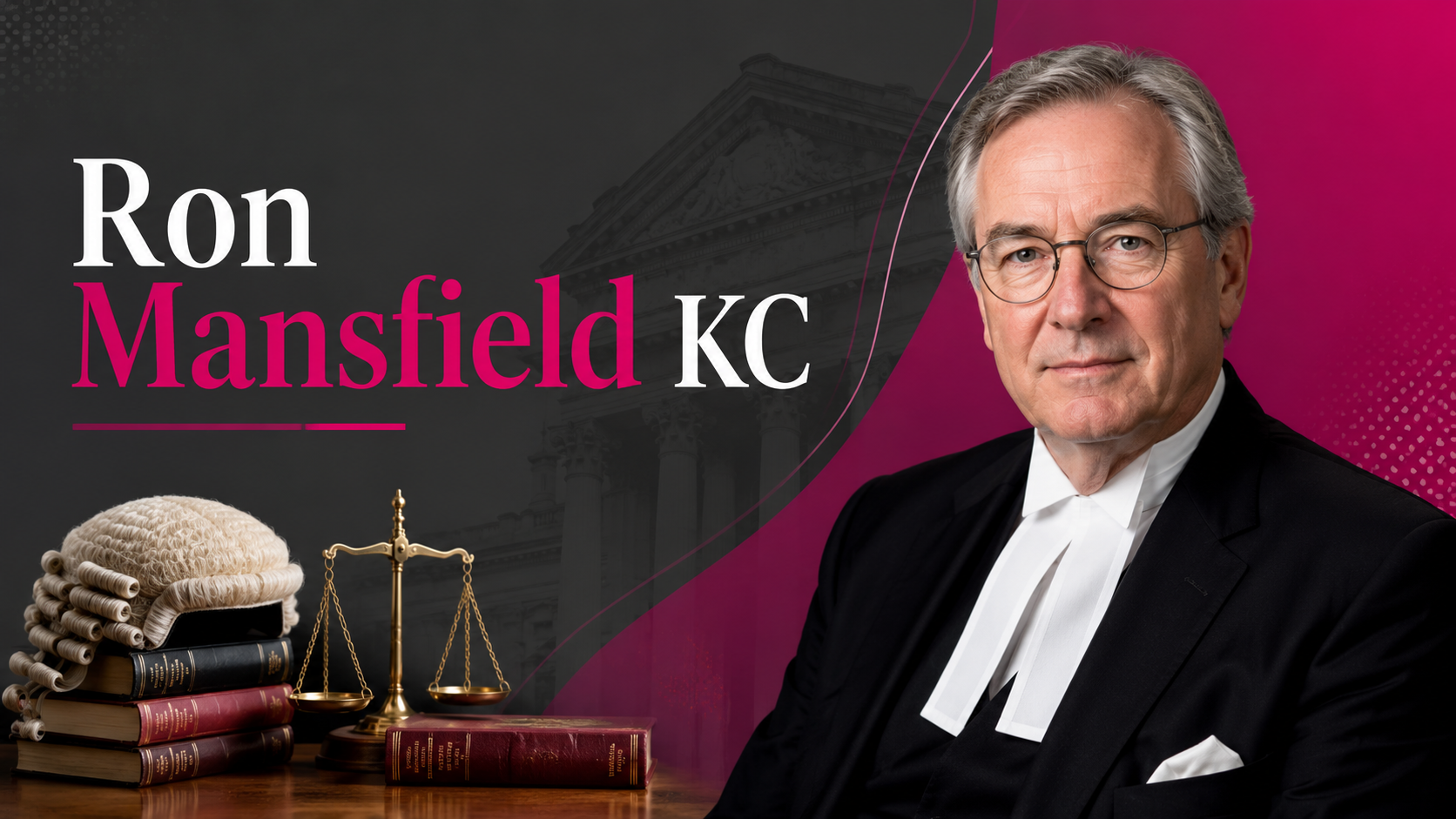
In New Zealand’s High Court, the difference between a fair trial and a rushed judgment often rests on one principle: due process. When public pressure mounts and evidence looks overwhelming, the system relies on skilled advocates who insist that every accused person receives a full and fair hearing. Ron Mansfield KC has built a career doing exactly that.
For more than three decades, this Auckland-based King’s Counsel has stood between clients and the full force of the state. From murder trials that dominated national headlines to long-running extradition battles and public warnings about the slow erosion of the Bill of Rights, Mansfield has treated legal rights as practical tools rather than abstract ideals. This article examines his career, courtroom methods, and wider advocacy to show why due process matters for everyone, not only those in the dock.
Early Career and Path to the Independent Bar
Ron Mansfield graduated from the University of Otago in 1989 with degrees in law and commerce. He was admitted to the bar the following year. His first years were spent as a Crown prosecutor, first at Preston Russell in Invercargill and later at Meredith Connell in Auckland under then Crown Solicitor Simon Moore. That prosecution experience gave him a clear view of how cases are built and where weaknesses often appear.
He later moved into civil litigation before joining the independent bar in 2000. From that point, criminal defence became his primary focus. The shift was deliberate. Having seen the system from the prosecution side, he chose to work for those facing its sharpest edge. Over time he developed a national profile for handling serious criminal work, including murder, major drug offending, fraud, and extradition matters.
In June 2021 he was appointed King’s Counsel, the senior rank that recognises excellence and leadership in the profession. Doyle’s Guide ranks him in its top “Preeminent” category for criminal defence. LawFuel named him Lawyer of the Year for 2024, citing his sustained presence at the highest levels of the criminal bar and his performance in one of the country’s most closely watched trials.
His chambers sit on Level 28 of the SAP Tower at 151 Queen Street in Auckland. From there he appears across the full range of criminal courts, from the District Court and High Court through to the Court of Appeal and Supreme Court. He also works with a small team of junior counsel and specialist experts, reflecting his view that complex cases demand coordinated effort rather than solo performance.
High-Profile Cases and Courtroom Method
Mansfield’s practice is defined by cases that attract intense media and public attention. These trials test the strength of due process because the pressure to convict can be intense.
One of the most prominent recent examples is the 2024 High Court trial of Auckland ophthalmologist Philip Polkinghorne. Polkinghorne faced a murder charge over the death of his wife, Pauline Hanna. The Crown alleged strangulation staged to look like suicide. The defence, led by Mansfield, argued the evidence pointed to suicide and that the prosecution had leaned too heavily on the defendant’s personal failings (extramarital relationships and methamphetamine use) rather than forensic proof of homicide. After an eight-week trial that drew national coverage, the jury returned a not-guilty verdict. Mansfield’s closing address stressed the absence of physical evidence supporting the Crown’s theory and urged the jury to separate moral disapproval from legal proof beyond reasonable doubt.
Earlier, Mansfield formed part of the defence team for Jesse Kempson in the Grace Millane murder trial. Kempson was convicted, but the case illustrated the defence role in testing every element of the Crown case, including expert pathology evidence and the narrative around consent and accident. Mansfield’s involvement reflected his willingness to take on difficult briefs even when public sentiment ran strongly against the accused.
His work for Kim Dotcom has stretched across more than a decade of extradition proceedings. Mansfield has repeatedly challenged the fairness of the process, arguing that the disparity between potential United States sentences and those available in New Zealand raises Bill of Rights concerns about disproportionately severe punishment. He has also highlighted differences in treatment between Dotcom and co-accused who resolved their cases in New Zealand. These arguments keep the focus on parity, natural justice, and the limits of state power in cross-border matters.
Other matters have included organised crime cases linked to the Comanchero Motorcycle Gang, electoral charges involving former MP Jami-Lee Ross, and various serious violence and drug prosecutions. Across these briefs, a consistent pattern appears: meticulous preparation, close attention to forensic and expert evidence, and a refusal to let public narrative override the requirement of proof.
Mansfield’s courtroom style is often described as calm, thorough, and client-focused. He is known for explaining complex points in plain language that juries can follow. Colleagues note his ability to remain professional under pressure while still fighting hard for the result. Clients frequently comment on the clarity of his advice and the sense that he treats the case as a human story as well as a legal contest.
Advocacy for the Bill of Rights and Due Process
Beyond individual cases, Mansfield has spoken publicly about the wider health of New Zealand’s legal protections. In a 2025 address to a Law Association farewell for retiring District Court judges, he warned that civil liberties sit on a “slippery slope.” He pointed to the global rise in conflict and polarising rhetoric, then brought the point home to New Zealand.
He cited the gang-patch legislation as an example of measures that, while popular with many, risk normalising restrictions that can later expand. Freedom of expression and the right to protest, he argued, are not theoretical rights. They require active defence even when the causes involved are unpopular. He urged the profession to push back against legislative and cultural shifts that weaken those protections, noting that rights once eroded are hard to restore.
This public stance aligns with his courtroom work. Whether challenging name suppression issues, testing the reliability of police interviews, or arguing about the proportionality of extradition outcomes, Mansfield consistently returns to the New Zealand Bill of Rights Act 1990. Sections protecting the right to a fair trial, the right to natural justice, and the prohibition on disproportionately severe treatment appear regularly in his arguments.
He has also co-authored material on criminal procedure and belongs to professional bodies including the New Zealand Bar Association, the Criminal Bar Association, and the Human Rights Lawyers’ Association Aotearoa New Zealand. These memberships reflect a broader interest in how the system operates for everyone, not only high-profile defendants.
Why Due Process Matters Beyond the Courtroom
Due process is not a technicality reserved for lawyers. It is the set of rules that require the state to prove its case, to disclose relevant material, and to treat the accused as innocent until the opposite is established beyond reasonable doubt. When those rules are followed, confidence in the justice system rises. When they are relaxed under public pressure, the risk of error increases for everyone.
Mansfield’s cases illustrate the point. In a high-profile murder trial, media coverage and public emotion can create an atmosphere in which “someone must be held responsible.” A skilled defence forces the court to examine the evidence rather than the atmosphere. In extradition proceedings, the temptation can be to defer to a powerful foreign state. Careful advocacy tests whether New Zealand’s own standards of fairness are being met.
The same principle applies in less public cases. Name suppression debates, challenges to search warrants, and arguments about the admissibility of statements all protect the integrity of the process. Mansfield’s record shows that these protections are not obstacles to justice. They are the conditions that make justice possible.
For law students and junior practitioners, his career offers a practical model. Mastery of the rules of evidence, willingness to engage expert witnesses, clear communication with juries, and a steady focus on the client’s rights remain the core skills of effective trial advocacy. For the wider public, the lesson is simpler: the system works best when both sides are strongly represented.
Recognition and Professional Standing
LawFuel’s decision to name Mansfield Lawyer of the Year in 2024 placed him among a short list of practitioners recognised for sustained excellence. The citation highlighted both the Polkinghorne trial and his longer body of work. Doyle’s Guide’s preeminent ranking and his place on successive Power Lists reinforce the same assessment.
Peers describe him as a “fighter that cares.” The phrase captures the combination of tenacity and client focus that appears throughout accounts of his practice. He is prepared to take on unpopular causes and to speak outside the courtroom when he sees systemic risks. At the same time, the feedback from clients and junior colleagues emphasises preparation, clarity, and respect.
His office structure also reflects a team approach. Junior barristers and law clerks work alongside him, gaining experience in serious matters while contributing research and support. Specialist experts in medicine, forensics, and investigation are regularly instructed. The model treats complex criminal work as a collaborative effort rather than a solo performance.
Conclusion
Ron Mansfield KC has spent more than thirty years demonstrating that due process is not an optional extra. From his early years as a Crown prosecutor to his current standing as one of New Zealand’s leading criminal defence silks, he has treated the rights of the accused as central to the legitimacy of the entire system. High-profile acquittals, long-running extradition challenges, and public warnings about the slow erosion of fundamental protections all form part of the same commitment.
For legal professionals, the value lies in the example of rigorous preparation and principled advocacy. For the wider community, the value is the reminder that fair process protects everyone. When the stakes are highest and the public mood is least forgiving, the presence of counsel willing to insist on proof beyond reasonable doubt remains essential.
If you or someone you know faces serious criminal charges in New Zealand, early advice from experienced counsel is critical. Understanding your rights under the Bill of Rights Act and the rules of criminal procedure can shape the course of a case from the first interview onward.
Frequently Asked Questions
Who is Ron Mansfield KC?
Ron Mansfield KC is a senior Auckland criminal defence barrister appointed King’s Counsel in 2021. He specialises in serious criminal cases, human rights and Bill of Rights issues, and extradition matters. He has more than 30 years’ experience and is ranked preeminent by Doyle’s Guide.
What is Ron Mansfield best known for?
He is widely recognised for defending clients in high-profile High Court trials, including the 2024 Polkinghorne murder trial that ended in acquittal, long-running work for Kim Dotcom on extradition, and earlier involvement in the Grace Millane murder trial defence team. He was named LawFuel Lawyer of the Year in 2024.
Does Ron Mansfield only take high-profile cases?
No. While many of his most public cases attract media attention, his practice covers a wide range of serious criminal work, including violence, drug offending, fraud, and organised crime matters. He appears across all levels of the criminal courts.
How does Ron Mansfield approach due process? He consistently argues that the state must prove its case beyond reasonable doubt and that personal or public disapproval of a defendant cannot replace evidence. He has also spoken publicly about the need to defend Bill of Rights protections against gradual legislative and cultural erosion.
Where is Ron Mansfield based?
His chambers are at Level 28, SAP Tower, 151 Queen Street, Auckland. He accepts instructions from across New Zealand and appears in courts nationwide.
What awards and recognition has he received?
He was appointed King’s Counsel in June 2021, is ranked Preeminent in Doyle’s Leading Criminal Defence Lawyers, and was named LawFuel’s Lawyer of the Year for 2024. He has also appeared on successive LawFuel Power Lists.
How can someone contact Ron Mansfield’s chambers?
Contact details are available on his professional website at ron.co.nz. Initial enquiries are typically handled through his chambers phone or email.
Additional Resources:
- Official chambers site: ron.co.nz: Practice overview, contact details, and professional background.
- New Zealand Bill of Rights Act 1990: Full text available on legislation.govt.nz for those wanting the primary source on fundamental rights.
You May Also Like: Lindsay Clancy Murder Trial: Key Details & Updates